For those interested in AI and/or kabbalah, I just finished a first draft of a paper from a conference. Comments via PM welcome
In the new global age of AI, the world is informational. For some thinkers, Kabbalah offers conceptual models for understanding the operation of this new informational world. I will look at four diverse authors: Mitchell P Marcus, head of Computer Science at the University of Pennsylvania, Avinoam Frankl, a product developer in an Israeli high-tech firm, Asher Crispe, who has worked as a Chief Technology Officer, and the entrepreneur Eduard Shifrin who has a degree in science and supports Jewish causes. All four of them seem to be independent of each other. All four authors start with Sefer Yetzirah to explain creation in AI terms, several of them turn to the emanation scheme of Lurianic Kabbalah. Most notably, one of the thinkers considers transhumanism as the messianic era when knowledge will flourish. I also present Arthur Green’s recoiling from these positions.
My book, A Jewish Trinity: Contemporary Christian Theology through Jewish Eyes, has finally appeared. I thank my generous colleagues for some amazing blurbs for the book.
A Jewish Trinity: Contemporary Christian Theology through Jewish Eyes is a groundbreaking study that signifies a new development in the relation of Jews to Christianity. Alan Brill should be commended for the breadth and depth of his scholarship, as well as for his openness of mind and respectful approach to Christian tenets of faith. This is a unique achievement, and both Jews and Christians will greatly benefit from reading it. Yaakov Ariel, professor of religious studies, University of North Carolina–Chapel Hill
This book brims with generosity to Brill’s Christian interlocutors, grounded in his lifelong serious study of Christian texts and theologies and in his mastery of Jewish traditions. That such a book exists is a cause for rejoicing. Too often, Jewish and Christian thinkers avoid talking together in a constructively comparative way, due to a paralyzing fear of getting things wrong or being criticized by the other. This book is a treasure trove for future conversation, undertaken in a spirit of respect while avoiding a false syncretism. Matthew Levering, James N. Jr. and Mary D. Perry Chair of Theology, Mundelein Seminary, and author of Engaging the Doctrine of Israel
Alan Brill is central to the new age of Christian-Jewish theological dialogue and cooperation. Here, he shows his unique mastery of the greats of modern Christian theology. Brill reviews traditional Jewish and Christian background materials to modern positions to reveal fascinating parallels and important differences between Christian and Jewish theology. The book will be of great interest to Christians interested in comparisons between Jewish and Christian theology. In addition, it holds deep resources for work in constructive Jewish theology and contemporary Christian theology. Steven Kepnes, professor of world religions and Jewish studies, Colgate University
Brill’s approach to Christian and Jewish theologies as two vibrant, diverse, and constantly evolving traditions makes this book a true tour de force in comparative theology. Brill compellingly demonstrates that these two traditions coexist in a shared theological “neighborhood,” at times intersecting and at times diverging, without ever renouncing their common intellectual and spiritual milieu. A Jewish Trinity offers an inspiring, illustrative, and delightful journey into the multidimensional relationship between Christian and Jewish theologies, through which one can learn much about both oneself and the other. Karma Ben Johanan, Department of Comparative Religion, The Hebrew University of Jerusalem, and author of Jacob’s Younger Brother: Christian-Jewish Relations after Vatican I
Alan Brill is a master of Jewish and Christian sources, and this is a breakthrough book. He examines key Christian doctrines, showing commonality, difference, and intriguing unanswered questions arising from his comparative exercise. Brill keeps the conversation open and avoids any facile assimilation. Gavin D’Costa, professor of interreligious theology, Pontifical University of St Thomas Aquinas, Rome, and emeritus professor of Catholic theology, University of Bristol
The work of theological reflection in Jewish-Christian dialogue too often has been lop-sided, with Christian theological perspectives dominating. In this book, Alan Brill offers a Jewish counterweight, indicating new pathways for Jewish comparative theological reflections on core Christian doctrines. Such work is needed in order to propel the dialogue further. Daniel Joslyn-Siemiatkoski, Kraft Family Professor and director of the Center for Christian-Jewish Learning at Boston College, and author of The More Torah, the More Life: A Christian Commentary on Mishnah Avot
Alan Brill’s direct engagement of Christian systematic theology helps advance the profoundly important but neglected area of theological study in the dialogue called for by the Second Vatican Council. The book significantly deepens the theological dimension of contemporary Christian-Jewish dialogue. Matthew Tapie, associate professor of theology, and director of the Center for Catholic-Jewish Studies, Saint Leo University
What are the Lurianic Kabbalistic intentions? How do Lurianic kavvanot work and how does one read the baroque pictorial notations of a Lurianic siddur? This is a very technical interview, very detailed, geared for those in the know. This is my second interview with Jeremy Tibbetts on Lurianic Kavvanot. It is a continuation of his contribution from 10 months ago introducing the kavvanot in Siddur Torat Chacham, a Siddur Rashash by R. Yitzchak Meir Morgenstern
This great article was written by Jeremy Tibbetts, a rabbi, who is the co-director of OU-JLIC for Anglos in Jerusalem and is the Director of Education for Yavneh, an intercampus leadership program. He is a student at Hebrew University in Jewish Thought, intending to focus on the Rashash and kavanot.
In this introduction, he walks us through the conceptual development of the kavvanot, starting the journey with Rabbi Isaac Luria (The Arizal, 1534-1572) who moved to Safed in 1569, where he lived and taught for three years. In those final years, R. Chaim Vital (1542-1620) learned from him and devoted the rest of his life, spent largely in Damascus, to developing a proper exposition of Lurianic Kabbalah.
A century after Vital died, R. Shalom Shar’abi or the Rashash (1720-1777) head of the Yeshivat Beit El became a new link in the chain of Lurianic transmission, focusing on divine names and pictorial representations of the kavvanot. In addition, he focused on the immanence of the Eyn Sof in the practice. Finally, the Hasidic rabbi R. Tzvi Hirsch of Ziditchov or the Ziditchover (1763-1861) focused more on the human experience, more on the human transformation, and how we become transformed into the divine qualities.
What are kavvanot?
Kavvanot are intentions to concentrate on when reciting the words of prayer or performing commandments (mitzvot). Often they focus on intangible realms and their particularities which are impacted by the kavvanot. The instructions are described in theoretical works or depicted in specialized prayer books. The Kabbalistic worldview hinges on the idea that the devotional mind can change the cosmos and the self at the same time.
Most people do not know about the kavvanot, due to access and accessibility. Regarding the former, the full set of Lurianic writings did not leave the land of Israel for over a century after Vital’s passing. As for the latter, Lurianic Kabbalah is extremely complex. Kavvanot necessitate erudite expertise in it and the ability to apply the most generalized principles and specific details of the system at once. Gershom Scholem considered Lurianic Kabbalah to be one of the most complex systems of thought in existence.
Kavvanot are not meant to undo or replace the simple meaning (pshat) of the supplications of prayer. Though one’s kavvanot take them to other realms, the practice must remain prayer fundamentally for it to work. Kavvanot work on the principle that as one gets to the peak of the experience, the more intentions there are to perform. The amount of kavvanot per word increases dramatically the more one prays.
2. For Hayim Vital, why do kavvanot?
Rabbi Isaac Luria told R. Chaim Vital that his kavvanot should focus on completing the worlds, yet at the same time, Luria understood the positioning of the worlds to directly impact human cognition and comprehension. These two aspects of completing the cosmos and attaining comprehension together are considered the fulfillment of humanity’s purpose.
For Vital, the ultimate outcome of kavvanot is to connect the light of the Infinite (Ein Sof) to our world, and then we need to draw it into vessels that can allow for non-overwhelming contact with infinite divine. Hence, “reducing the light is the ultimate intent of fixing the worlds (tikkun)” (Etz Chaim 9:4).
Kavvanot rectify the shattering of the vessels (shevirat hakeilim), whose broken pieces constitute our imperfect physical and spiritual reality. Our world is fundamentally broken, and as long as we do not do the fixings (tikkunim) necessary to fix it, evil and injustice will remain manifest. The tikkunim create partzufim, an infinite vessel made of ten sefirot which each contain ten sefirot and so on ad infinitum. These vessels, being infinite, can capture the light of the Ein Sof. Repairing these shattered vessels through kavvanot is the necessary prerequisite to making the light of the Ein Sof manifest within them.
This process of rectification followed by revelation also occurs within the individual. One grows spiritually as they perform the kavvanot, even in a semi-literal sense: they can fix and shine the light of holiness into the soul, and in their most idealized form, add completely new layers to it. Vital writes in Sha’ar haGilgulim that “when a righteous individual intends a complete and good intention (kavvanah), they can draw down a new soul” (Sha’ar haGilgulim Hakdamah #6).
There is a synchronicity between the completion of the worlds and of the self because the macrocosmic structure of the worlds and the microcosmic structure of the self mirror and influence each other. The fact that one of the names that Vital gives for the influx of Divine light into the partzufim is consciousness (mochin) is not coincidental. Corresponding to the upper sefirot of Chochmah, Binah, and Da’at, the mochin fill the “heads” of the partzufim before permeating the lower vessels too. As we strengthen and fill the partzufim, there is a direct impact on our consciousness in kind: “all of the forgetfulness that a person has is drawn from these lesser mochin. Whoever can, through their actions, draw them down below [to their proper place] by drawing in the greater mochin which push them… will have wondrous recollection in Torah and will understand the secrets of Torah.” (Etz Chaim 22:3).
This passage describing the interconnection between the ontological level of mochin and the commensurate mental outcomes of drawing them in was already considered extremely consequential in the early reception history of Lurianic writings.
3. For Vital, what is the difference between Intention (kavven) and envision (letzayer)?
Vital states explicitly that “one should intend” (veyikhaven) when describing daily prayer kavvanot. However, in a few places, such as in the intentions for the blessing after meals (birkat hamazon), he deploys a different term: “in the first blessing, from start to finish, envision (yetzayer) before your eyes [the Hebrew letters] aleph, lamed, hey” (Sha’ar haKavvanot Drushei Shabbat Seder Erev Shabbat) For each of the four blessings, one envisions one of the letters of the name ADNY spelled out. Letzayer is extremely uncommon in writings on kavvanot and extremely common in writings on yichudim. Both can be contrasted in Vital’s writings with changes in the worlds which occur without our intention automatically (mimeileh).
Lechaven is a specific type of intention. Vital writes that “you should intend and think in your thoughts” (Sha’ar haKavvanot Drush Kabbalat Shabbat #1). It occurs in the mind. These kavvanot are focused and thought-based but not imagistic. Kavvanah is an applied form of thought.
In normal waking life, thoughts pass in and out of our mind quickly with little perceivable consequence for the world around us. Kavvanot are the practice of taking thought and using it to affect the spiritual worlds like our hands would affect the physical world around us. As one contemporary commentator writes, “one must intend actively, not just think in their thoughts that the matter occurs of its own accord (me’eilav)” (Sha’ar Ruach haKodesh Im Peirush Sha’arei Chaim by R. Chaim Asis, Vol. 2 pg. 561).
The experiential impact from this focused type of kavvanah has two aspects. First, as discussed above, the actual technique of utilizing the focused intentional mind as an experiential component linking between the worlds’ spiritual states and our own cognitive states. One finds oneself at the bottom of a chain of divine illumination.
There is another aspect though, discussed in the recitation of the Kedusha, when many of the tikkunim of the daily prayers have been completed: “When saying ‘the world is filled with God’s glory,’ which is a secret of Malchut, intend [vatechaven] that we are the children of Malchut and we receive holiness from our mother. Therefore, intend to absorb yourself within Malchut to receive the holiness drawn onto her” (Sha’ar haKavvanot Drushei Chazarat HaAmidah #3). The ultimate type of kavvanah is not visual revelation but absorptive transformation. At its peak, one is no longer acting on the worlds as something external but as something internal.
We reclaim our place in the constellation of worlds and “when drawing the supernal holiness to the Blessed One,” one can “draw an aspect of this holiness onto themselves as well… they are sanctified and God is sanctified with them and within them” (ibid.). The focus on fixing the upper realms, in particular the lower partzufim and Malchut above all, is not a blockage to experience but a gateway to experience, a reveling in the intangible effusion of the divine.
4. Are Kavvanot individualized?
Kavvanot must be individualized. Vital writes that he was instructed to intend based on where his “soul is drawn from,” and so he must intend through one kavvanah particularly, and not the others” (Sha’ar haKavvanot Drushei Pesach #11). So too, the practice of meditating on combinations of divine names (yichudim) requires that one intend “according to their soul root” (Sha’ar Ruach haKodesh Yichud #12), expressed by punctuating the names differently.
This elevated type of knowledge, to identify the roots of different people’s souls, is exceedingly rare: R. Chaim Vital records that even great Kabbalists such as the Alshich, R. Eliyahu de Vidas, and Vital himself relied on the Arizal to inform them of their soul’s root. This could be conveyed in very basic terms, as one of the ten sefirot; more complexly as corresponding to a body part of Adam haRishon, who contained all souls in his pre-sin state; or more convoluted still, as part of a chain of prior reincarnations whose challenges in life recur and contour the tikkunim incumbent on them, such as when Vital writes that “the spark of Rabbi Akiva is closest to me out of all, and everything which happened to him happened to me” (Sha’ar haGilgulim Ahavat Shalom ed. pg.157).
In addition, the practice of kavvanot necessitates attention to our situational context and the world outside of us. If we do not pray with people who we are close to and whose challenges in life are understood intimately by us, the Arizal states that our prayers “will not bear fruit” (Sha’ar haKavvanot Drushei Birkot haShachar). Time and locale affect the mystical formulae of kavvanot.
5. What is the role of simchah in kavvanot?
Joy (simchah) has a central role in the efficacy of kavvanot. Vital writes at the beginning of Sha’ar haKavvanotDrushei Birkot haShachar that “it is forbidden for one to pray in sadness, and if they do so, then their soul (nefesh) cannot receive the supernal light which is drawn down to them at the time of prayer… the essential benefit and wholeness and attainment of the holy spirit depends on this matter.” One’s emotional state directly affects their soul’s ability to receive divine light.
Vital calls prayer the fulfillment of the mitzvah to “love your neighbor as yourself.” In particular, “if a person has knowledge and comprehension to know and be familiar with their fellow’s soul (neshama), and if there is something that is troubling their fellow, each one must join into their pain.”
6. Explain the three classes of kavvanot: perceptions, illuminations, and tikkunim.
Vital delineates three main classes of kavvanot and yichudim: hasagah (perception), he’arah (illumination), or tikkun. Yichudim of all three of these types are integrated into the practice of kavvanot,
The yichudim “to perceive some perception [hasagah]” (Sha’ar Ruach haKodesh Ahavat Shalom ed. pg. 39) center on a variety of prophetic practices and experiences that one can undergo. For example, these yichudim allow one who “has an awakening due to a soul which speaks with them… and doesn’t have the strength to bring out words from potentiality to actuality” (ibid., pg. 14). In another yichud in this section based on the name of the angel Metatron, Vital proscribes one to “close and shut their eyes and to isolate themselves [titboded] for one hour, and then intend to this yichud” (ibid., pg. 16). This also includes yichudim performed on the graves of righteous individuals to allow for “the cleaving of your soul to their soul” (ibid., pg. 33). At the height of this technique, one intends to sacrifice their soul, “raising up your soul combined with the soul of that righteous one” (ibid., pg. 34). When the hasagot of the Arizal are discussed in this work, they relate to his access to supernatural knowledge, such as the appearing of Hebrew letters on individual’s faces which indicate their merits or iniquities, dream interpretation, or the ability to learn secrets from the chirping of birds and the beating of a person’s heart (ibid., pgs. 51-61).
The second class of yichudim “clarify and illuminate [ta’ir] one’s soul to be a ready vessel to receive the supernal light continuously” (ibid., pg. 39). These yichudim are introduced by discourses on perfecting one’s character traits and ritual observance. These techniques strengthen the connection a person has to their individual soul, such as yichudim in which one contemplates being made in the tzelem Elohim [divine image] and how the body is constructed from divine names (ibid., pgs. 43-44). These yichudim utilize the soul as a bridge to greater experiences of spirituality and sanctity, like intentions to draw the sanctity of Shabbat into each weekday (ibid., pg. 45).
The third class “were given to human beings to repent” (ibid., pg. 61) and delineate the cosmic and individual impact of one’s transgressions. In these yichudim, Vital often records both an explanation of the disrepair caused in the worlds by a given transgressive act and then prescribes a series of penitential practice like fasting or rolling in snow alongside yichudim that one must perform. Gematriot [alphanumerical values of letters] feature prominently. For example, the tikkun for anger requires undertaking 151 fasts, the gematria of anger in Hebrew. During these, one intends to a form of the divine name Ehyeh which has a gematria of 151 as well (ibid., pg. 73).
7. How are Kavvanot arranged?
There is an inner lexicon, logic, and grammar to the kavvanot. They flow sequentially one into the next and cannot be performed out of order or be changed. Texts on kavvanot enumerate a variety of cognitive acts that are acceptable. The intentional mind can do a number of acts. It can draw effusion down (hamshacha), raise up (Aliyah)nitzotzot from among the kelippot, integrate (lichlol) its own soul with a given spiritual structure to elevate oneself spiritually, and much more. For the Arizal, their transformative potential lay specifically in how they change the worlds, a byproduct of which is a shift in human cognition.
One should nor pick single kavvanot out of theit logic and grammar. However, there is a machloket (disagreement) between Sephardi and Ashkenazi Kabbalists: the former say that whenever one learns a kavvanah they should begin to utilize it, while the latter say that one should only start practicing after having covered the entire system (Rav Morgenstern’s Netiv Chaim pg. 34). But both would look down upon any method of learning which focused exclusively on meditating on the self and which would exclude the change to the worlds. The Arizal himself maintains that one’s essential intention should be to the upper realms rather than the lower.
8. For R. Shalom Shar’abi, the Rashash, what is the purpose of kavvanot?
The Rashash looked down on attempts by other authors to speak about divine worship in an experiential register, as he believed that their attempts to do so effaced the Torah and did not reflect its true depth. The experiential is so lofty that it’s purposefully excluded from an esoteric work which plumbs the secrets of the universe and the nature of divinity. The Rashash intentionally wrote tersely. He states “I was brief regarding divine service in places where it would have been fit to expand a bit. This statement is true, for I made it brief purposefully (lechatchila).” (Nahar Shalom 34a).
Yet, he states that the work of kavvanot, focused on external cosmic worlds, gives way to an experience of connection and divine service because they are one and the same.
“All of our prayers are to the Ein Sof… according to the measured amount of clarification (birur) that one clarifies and raises up [of the sparks of divinity]… from partzuf to partzuf until the highest heights where they are fixed and return to be drawn down as mochin… then the ohr Ein Sof encased within, the spark and intermediary, is present and descends into every partzuf, from level to level to the end of all levels… then relative to us, we are justified in using names (kinuyim) [to address the Ein Sof directly]… and so too in the souls [narancha”i]” (34a).
The righteous individual is the vessel made physical; humanity is the partzuf which is trying to reconstitute itself, through a descent of the cosmic into the physical which causes it to “mitaveh” [congeal] (Etz Chaim 5:2). Our physical world is spirituality congealed.
Based on Vital’s Sha’arei Kedusha, the Rashash hints further at the inner world cultivated through kavvanot. He calls the state of being where we cannot perceive the Ein Sof “slumber,” but through the devotional life of kavvanot, one can “awaken” the soul and perceive the Ein Sof (Nahar Shalom 39a). This state of wakefulness is one where the individual is attentive to the presence of Ein Sof in all things through their soul.
Rabbi Shalom Sharabi -Rashash
9. How is the Rashash different than Vital?
For Vital, the journey of the kavvanot of prayer is relatively linear: as one progresses from the beginning of the siddur to the peak of it at the Amidah, one is ascending in the worlds, and tachanun marks the inflection point where one begins to descend back towards our lived reality. Ein Sof is relevant in a theoretical sense to the entire project as we strive to connect to Ein Sof, but the essence becomes the medium of spiritual structures which we can tangibly access.
For the Rashash there is an immanent experience of Ein Sof which is possible because of prayer and that continues beyond it. Vital’s writings and the siddurim produced before the Rashash rarely, if ever, deal with Ein Sof directly.
The Rashash saw all of Vital’s writings as one fully unified corpus. Even concepts like the divine self-contraction (tzimtzum) with which creation began, largely beyond the scope of kavvanot in Vital’s conception, return to the foreground in the Rashash’s system.
Vital writes that the ultimate intent for creation was for the Ein Sof “to be called ‘compassionate’ and ‘gracious” (Etz Chaim 1:2). However, these terms which come up at the beginning of creation rarely recur in Vital’s writings on kavvanot or yichudim. Some commentators took these to be primarily of philosophical import alone for understanding the nature of reality and Being.
For the Rashash, even these seemingly theoretical statements are eminently practical understandings of kavvanot. Understanding the creation of the world as driven by the desire of the Ein Sof to acquire names is necessarily part of the contemplative practice of kavvanot, to experience Ein Sof within us, allowing us to recognize its attributes and to channel that into our prayer.
This difference influenced many of the innovations of the Rashash in laying out his siddur. Unlike previous versions of the Lurianic prayerbook, which formulated the kavvanot primarily as instructions, the Rashash’s siddur depicts each instruction with a series of divine names that symbolize the different layers of light affected throughout kavvanot. The deepest layer is “light (Orot)… the names of the lights are the souls (narancha”i) and are always the same… and never change at all… and the blessed Or Ein Sof is encased within them” (printed in Rav Yaakov Moshe Hillel’s Sfat Hayam Sefirat haOmer pgs. 276-277).
10. Are the Rashash’s kavvanot tikkun or hasagah?
For Vital, hasagah can be considered a consequence of tikkun. What we get from fixing the worlds allows us to continue to fix them even better.The system is cyclical. For the Rashash, the two could almost be said to be identical.
The Rashash believed that if we are truly meant to be considered as part of the cosmic realms, and if our experiences and perceptions fit into this schema, then tikkun and hasagah are basically identical, two perspectives on the same phenomenon. A person who practices this properly reveals the infinity of their soul within their body and wakefully encounters the Ein Sof within everything, especially themselves. The experience is immanent and relational and deeply unitive. The individual’s unity with the Ein Sof leads us to perceive that “all is made into one unity… in the secret of ‘I have placed Hashem before me always’” (Nahar Shalom 34a). Wakefulness is a contemplative state where our inner world is permeated with the experience of Ein Sof.
In the ultimate stage of tikkun, this experience becomes a metaphysical reality. The Rashash explains that Adam haRishon’s body originally extended across all the spiritual realms. The upper realms were literally his inner world, and they in turn were a container for Ein Sof. In true tikkun, we have a hasagah of what this was like.
11. For the 19th century R. Tzvi Hirsch of Ziditchov what is the purpose of kavvanot?
Just like in Vital’s writings and in the Rashash’s, for the Ziditchover, tikkun and hasagah are coterminous. Similar to the Rashash, the Ziditchover states that divine names are the key to connecting to the Ein Sof, as “our essential weapons [to purify the world] are the blessed names, to unify in them the vitality and the souls of every world… and the names are the soul of the sefirot, and the Ein Sof is the soul of the names” (Pri Kodesh Hilulim 2b).
Unlike the Rashash, the Ziditchover writes openly about the personal transformation that one must undergo in order to practice kavvanot properly. Through learning Kabbalah, one can understand how to “imitate” them in our thought patterns and actions. We must utilize the Lurianic writings as maps for how to develop our spiritual self as we approach the Ein Sof. Ultimately, one ascends high enough to essentially transcend the normative practice of Lurianic kavvanot and enters into a state of mind where they can pray in true connection to the Ein Sof. The kavvanot are the gateway to this altered consciousness.
12. What is the role of the Eyn Sof for Zidichov?
A person directly relates to the immanence of the Ein Sof. The Ziditchover writes that the Ein Sof is revealed in the world through our actions: “drawing the Ein Sof into the divine names makes it become ‘that which permeates all worlds’ (memaleh kol almin) through the power of its essential holiness. Without this, the Ein Sof is removed from the world and its holiness… then the Ein Sof would not be called ‘creator of all worlds’” (Pri Kodesh Hilulim 3b). But there is also a strong mental element as well: the Ein Sof is “the thought which descends into the world of emanation (Atzilut, the highest world)” (Pri Kodesh Hilulim 1b). One’s thoughts change in the kavvanot of this world.
13, Explain intentional kavvanah vs reflective kavvanah according to the Ziditchover.
In the Ziditchover’s understanding, the light of the three lower worlds represents one’s thoughts, and the vessels represent one’s actions. One’s prayers are focused and intentional in the worlds of action, formation, or creation, which are called “the worlds of separation.” The divine light is not truly unified with the vessels that contain the light.
[The mind as it manifests when one is in the worlds of separation is not different from the mind that one exhibits in daily life: to focus on one thought, an individual has to continuously redirect their attention back to that thought as the mind naturally wanders, trying to keep its train of thought moving. In this state, the kavvanot are external to the mind. Hence, he writes that “the act of kavvanah shows a likeness to the world of creation” (Pri Kodesh Hilulim 2a).
In contrast, the higher world of emanation (atzilut) is called “the world of unity.” It exhibits total unity between light and vessel, hence the intentions performed there are reflective of this. In the world of emanation, one must change thought itself to a reflective internal practice. He characterizes this form of thought unified with action as essentially reflexive: “for when a person eats, they need not think first how to chew with their lips, nor how to lift their legs to walk” (Pri Kodesh Hilulim 1b).
There are two ways that this plays out. First, the desired result of prayer happens automatically, because one’s thought and the related action are completely unified. He writes that when one prays for healing in this state, “one does not direct thoughts to interpret ‘heal us” or certainly not to intend that there will be healing for them. It requires no intention because the healing is done on its own” (Pri Kodesh Hilulim 2b). This elevated state of mind unlocks the mental potential to create whatever change we wish to see in the world.
Furthermore, the embodied nature of them as a practice blurs the lines between the body and soul. In this state, the Ziditchover states that in prayer “at times, they will raise their right hand, and we then know that the vitality desires wisdom [as wisdom, hokhmah, is associated with the right side], or he will raise their left hand, and we know that the soul and vitality desires to enrich itself.” (Pri Kodesh Hilulim 3b). In this elevated state of kavvanah associated with the world of emanation, new and timely kavvanot will also emerge as one observes their own body’s movements and interprets the meanings. Connecting to the immanent Ein Sof opens up a wellspring of creativity to create these new kavvanot.
14. How do the Rashash and the Ziditchover differ in their understanding of how kavvanot work mentally?
For the Ziditchover, when one practices kavvanot in the worlds of separation, one must constantly direct their mental activity to particular intentions. These are external, needing to constantly be reintroduced throughout the practice. As the mind wanders naturally, one must continuously reintroduce the thought of “intend.” Once one arrives to the level where thought and action are unified, one’s mental and physical activity is unified and needs no conscious redirection: all of one’s actions are the state of kavvanah. However, one can observe one’s physical activities and “learn” from consciously what is subconsciously expressed by the body’s movement in the act of intention.
As for the Rashash, the more one practices the kavvanot, the more one’s soul (the inner seat of the Ein Sof) expands within and controls the body. Thus, one’s internal and external perceptions are transformed as one sees the Ein Sof within and without. Without this understanding, one is called “asleep,” and one who fully achieves it is “awake.” The perception of a person who experiences this wakefulness not only sees the Ein Sof externally, but also internally as well.
When comparing the Ziditchover’s and Rashash’s approaches to kavvanot, we find many important similarities. These include quoting shared source material, relevant historical leanings or beliefs related to kavvanot, and more. At the same time, we see important differences in the mechanics of the kavvanot and their results. It would be accurate to characterize the similarities as more theoretical beliefs about kavvanot and the differences as pertaining to practical elements. The first chart shows the similarities and the second chart shows the differences.
Screenshot
15. What is the subjective experience of kavvanot?
I can only really say at this point how it feels to me. The focus that kavvanot necessitate becomes an opportunity to slow down and savor the experience of prayer. Doing them for long enough strengthens my concentration and makes me more aware also of my body and my surroundings. Time feels slowed during this practice. I find that doing them draws my attention to a pleasant feeling in my body, particularly in my head. Over time, I have ascribed personal understandings and feelings to different kavvanot—there are parts that I connect with more, during which I feel more deeply.
Even though kavvanot are very mentally active and I am trying to follow the instructions of the siddur, my inner monologue is not only the words on the page but associations or prayers that I connect to these parts. It is an energizing and activating practice. They can awaken a feeling of intensity and passion, of movement even. I think of this as hitlahavut. Often, I will take a deep breath and pause for a moment within the practice and find myself awash in an “oceanic feeling,” one of calm and connection. This is what I think of as deveikut.
Before I continue my series on Rabbi Eliezer Melamed and post his views of Christianity and other religions, I will take a digression and present on the classic book by Rabbi Abba Hillel Silver, Where Judaism Differed (Macmillan, 1958). Rabbi Silver (d. 1963) was a renowned Reform Rabbi, a prolific author, orator, American Zionist leader, and fundraiser for the new state.. His most famous book, Where Judaism Differed, explained how Judaism is different from Christianity and other religions. The book was a pillar of the thinking of American Jewry. Whenever I explain my interfaith work to an older generation or explain what I am writing, I inevitably receive some form of Silver’s words in response. I teach in a program in Jewish Christian Studies, so I know there are hundreds of better books, yet Silver’s ideas that Judaism is completely the opposite of other religions still percolate in the writings of other authors such as Rabbi Yitz Greenberg or in sermons from all denominations, or are found on social media, hence these ideas are often the basis for much in ChatGPT. (We also have the opposite on ChatGPT that Judaism and Christianity share Biblical values, the commandments, and the Golden Rule.)
In short, Silver assumes that whatever Christianity teaches, Judaism is the opposite. According to Silver, Christianity is elite, and Judaism is democratic. Christianity is about sin and salvation; Judaism has no concern with sin and salvation. Christianity is ascetic, Judaism is not. Christianity is mythic and magical; Judaism is not. Christianity assumes that all is predetermined without free will, and Judaism offers free will and social progress. Christianity advocates celibacy, Judaism does not.
Original Cover 1956
Christianity accepts a Trinity, Original Sin, Incarnation, a personal messiah, miracles, redemption through God, a virgin birth, and the need for salvation of the soul. Judaism rejects these concepts and every theological idea in Christianity. Christianity is a mystery religion, while in Judaism, “the moral life and the aspirations of man are the “sacraments: of Judaism.” (210) Christianity is otherworldly and concerned for the afterlife; Judaism has no interest in eschatology.
Christianity and Islam, in Silver’s view, wanted to be free from the law, meaning to break free from ethics and morals. (Hence, Rabbi David Novak had to pen an essay explaining to Jews that Christianity is not antinomian).
In his words, only Judaism of all the religions of the world believes in human progress. (171). Only Judaism is kind to the poor, teaches humility, and has reverence for human life as shown in his comparisons to Roman Latin authors.
Silver paints the other religions in terms of their most monastic other-worldly forms and he is especially negative toward Hinduism and Buddhism seeing them as world denying, ascetic, and having little to teach. They are fatalistic and life is predetermined; this is his explanation of karma. These Dharmic religions are pessimistic, focus on suffering, and afflicting the body. He credits Christianity and Islam with many of these same negative attributes. (Once should compare Rabbi Kook’s fascinating correspondence with Rabbi Shmuel Alexandrov for a sharp contrast, in which the Russian rabbis have positive appreciation of Buddhism). He paints the Asian religions as lacking any moral teachings. Needless to say, this is an entirely erroneous characterization. I do not need to show that they have extensive teachings on ethics, family life, forgiveness, correct speech, correct actions, and working on personal virtue.
Silver paints Judaism as engaged in a continuous historic battle against idolatry, idolatrous Canaanites, against Hellenism, against ancient paganism, against Christianity, which for him is really just part of the synthesis with pagan Greco-Roman world, and against the otherworldly pagan Calvinists of our own time. In contrast, Judaism teaches sober morality, personal piety, and the “prophetic tradition of social progress”!!!! (85) This reading of Jewish history was canonized by Heinrich Graetz in his 19th-century classic History of the Jews and the reading of Christianity as Greco-Roman, not Judaic, was the definitive position of the German theologian Adolf von Harnack. Silver cites the historian George Foot Moore’s Judaism in the First Centuries of the Christian Era, but only seems to take from it that Judaism and God-fearers were “waging war with great energy against polytheism and idolatry.”
The book also typifies a Jewish trend of creating false historical genealogies crediting many aspects of Christianity to pagan influence. In 2025, I still see on social media, by people who should know better, the acceptance of the statement that Christmas Trees are from Roman paganism, a false statement, the earliest possible record is the 15th century, or that Easter/Pascha has anything to do with Ishtar.
In the end for Silver, Judaism is a pure ethical monotheism that is unique in believing in human progress. In the background of this, one hears echoes of Hermann Cohen’s views of Judaism as a unique monotheism striving toward messianic social progress but adapted for the popular pulpit. Judaism is the only religion not death-obsessed or about self-effacement, but rather affirming human progress.
The late 20th century popular Jewish maxims that Judaism does not engage with theology or have any theology, let this book linger long in people’s conceptions. Popular ideas that Judaism has no afterlife or eschatology dovetail with this book. I lose any ability to engage with the content of Rabbinic Judaism, midrash, Aggadah, kabbalah, or even medieval Jewish philosophy. Judaism is an abstraction and defined by negation of others. There is no message of the High Holy Days, the three festivals, Chanukah, prayer, or Jewish life.
To his credit, Silver was responding to several prior decades of liberal Jewish rabbis proclaiming that Judaism and Christianity taught a common universal message of prophetic ethics. However, his solution was to negate every idea of Christianity as the definition of where Judaism differed, without offering any serious positive theology of Judaism. Basically, being Jewish means rejecting a Christmas tree and every positive Christian value. The book was written in a different era, it was before Vatican II’s Nostra Aetate, and he was formed in the heyday of social progress of the first half of the 20th century.
A recent book on religious polemics portrays Silver as driven by the need for apologetics, to stem the tide of Jewish self-hatred, to respond to the stereotypes about Jews. (Jay Newman, Competition in Religious Life, 92). Silver’s work is “vitalized by the exaggeration and caricature that characterizes almost all apologetic works.” He excuses Judaism from all its weaknesses and finds the worst in other religions. He violates one of the prime directives in interfaith comparisons: Do not compare your best to their worst.
At the time of its release in 1956, the New York Times reviewed the book with praise for showing that Judaism is different than Christianity. The CCAR proclaimed that “the best introduction to Judaism that we know.” While a more cautious Felix A Levy, a Reform rabbi, praised the book as a new apologetic Hizzuk Emunah, referring to the 16th-century apologetic work by Isaac Troki, but faults him for leaving out revelation and halakha.
On the other hand, Lou H. Silverman, Professor of Jewish Literature and Thought at Vanderbilt University, in a 1958 review, faulted the book sharply for reducing Judaism to oppositional negation. Judaism is defined as not Pauline Christianity, but we do not learn at all how Rabbinic, philosophic, and mystical Judaism understood the same issues. Silverman opines that the book fails to do full justice to the texture of the tradition.
Silverman points out that the Jewish prayer book in any version is about God having sin, God’s mercy on us, and forgiving us. To say that Judaism has no sense of superiority or racial thinking and is the only universal religion rubs Silverman the wrong way. He points out that the Reform Union Prayer Book referred to the Jewish race until 1933 and it took until 1945 to remove the racial elements. Silverman as an exclamation, asks: Where is Yehudah Halevi, Franz Rosenzweig? Silverman asks: when Silver states that a concern with “eschatology represented a sharp deviation from Classical Judaism,” what does that even mean? Silverman notes that Silver certainly excludes explicit Rabbinic concerns. Silverman ends his review by wishing that Silver had written a confessional, mature statement of his beliefs as a Reform Jew, rather than just presenting Judaism as the negation of Christianity.
Msgr John M. Oesterreicher of the Institute of Judeo-Christian Studies at Seton Hall University wrote a nine-page negative review of the book. At the time, Oesterreicher was editing a journal called The Bridge which looked at similarities and differences between Judaism and Christianity, and was already working on the 1961 “Decree on the Jews” (Decretum de Iudaeis), which is considered the first draft of Nostra Aetate.
Oesterreicher points out that Silver removes any sense of the word of God or God’s call to Abraham, or Sinai, replacing those ideas with a prophetic Jewish religious genius and ideas that we follow Judaism as utilitarian, “opportune and useful for life.” He is especially irked that Silver refers to God as a due to the Jewish genius created the universal God idea, which Oesterreicher considers “not part of the truly Jewish vocabulary.”
Oesterreicher declares that “the light in Rabbi Silver’s book is not the light of scripture” and that he is at variance with Jewish tradition. For example, neither the Hebrew Bible nor Rabbinic texts see sin as degrading; rather, they have full theologies of sin, repentance, and atonement. (This is like Silverman’s critique above that you cannot state that Judaism has no eschatology). He also notes that Silver is against mysticism and mischaracterizes both Western and Eastern mysticism.
Oesterreicher obviously thinks Silver misreads and mischaracterizes Jesus, Paul, the New Testament, and Christian teachings in many places. For example, the Sermon on the Mount is clearly rabbinic in context and not to be relegated to foreign “Greco-oriental” values. Silver psychologizes Jesus’ disciples as unable to admit their teacher was arrested and killed so they go into psychological denial, delusion, and imagine him as still alive. Silver shows no knowledge of Jewish memra theology or the variety of first-century Jewish ideas.
In conclusion, Oesterreicher agrees that Judaism and Christianity are different and cites Silver approvingly that “to gloss over differences as a gesture of goodwill is a superficial act” (289) But that does not mean they are opposites. Rather, Oesterreicher ends by saying that the discussion of similarities and differences should be pursued with an “Untiring, even painfully, open eye.”
The digitized American Jewish Archives preserve the letters that Silver received from publishers about his book. Harper and Bros rejected it based on Reviewer #2. Simon and Shuster rejected it with a long letter including the following paragraph:
The third point is, I fear, a more sensitive one, but perhaps it would be best for our mutual understanding to state it baldly. All of us have been somewhat troubled throughout the book by the invidious comparisons of Christianity with Judaism. Enduring spiritual values, I feel, are self-demonstrative; they do not need to be singled out and lauded at the expense of something else. I realize that such comparisons have an enormous controversial value, but I also feel that they have the final effect of weakening your rich, positive statements, or detracting from the dignity of a great tradition. It is for this reason, as well as for the reason that such invidious comparisons may offend and repel people of other faiths, that I venture to suggest that you reconsider them.
In the end, Macmillan published it as written. But before publication, Silver had his friend Ludwig Lewisohn read the manuscript to offer comments. Ludwig Lewisohn (1882–1955), was a novelist, outspoken critic of Jewish assimilation, and a founding faculty member of Brandeis University.
Lewisohn flags the book’s thesis that history “manifests a clear upward movement in human development,” noting that this “seems to me violently contrary to historic experience and to negate by implication the special redemptive function or the Jewish people and the meaning of its martyrdom. I do not like to see concepts like “development” and “progress” applied to Jewish history. Unless we died for the eternal Law, what did we die for?” This defense of Western liberalization (so-called) has been totally invalidated by history. After the Holocaust, pre-war optimism seemed misguided.
Also noted is that Silver credits anything he does not like in Judaism to outside influences. Lewisohn writes: “Too much importance attached to the theories of Babylonian influences, etc. These are all grounded in malice, conscious or not, and the desire to eliminate the reproach of Judaism’s uniqueness.”
Once interesting observation from the book “Here, my eye catches one of those usages that lower tone. “Judaism has little sympathy with the spiritual lone wolf.” (138) That’s a screaming incongruity–like chalk scratching on a blackboard. And were not the prophets lonely and hence embattled souls?”
Lewisohn does not want to reject the spiritual and theological teaching of Judaism just to engage in negations. Lewisohn rejects the sharp contrast with Christianity
Of course. “original sin” in the Augustinian sense is nonsense. But does not Judaism, too, recognize deeply man’s rebellion against God? Is not therefore teshuvah the end and aim of life. And does not the classical liturgy make it clear that we need God’s grace–vayihi razon milfanecba. I’m frightened for the nobility and inwardness of Judaism when these things are stated after this fashion.
I’m sorry. I think the notion of “progress” in that sense –social progress without inner change-is totally discredited and Jews and Judaism will discredit themselves by clinging to it… The essence of the whole matter is in the Alenu. Progress means obedience to God’s Law and abstention from idolatry–of man, of State, of all the idols or the market-place. And that, thank God, is Judaism.
In conclusion, we are now blessed with sixty-five years of work showing the similarities and differences between Judaism and Christianity. We have fine works on the New Testament, Patristics, Rabbinic, medieval philosophy, and modern thought. No one would write like Abba Hillel Silver anymore. But the influence of this book remains vast in common understandings. I am still greeted with citations of this work. And if you want to judge the knowledge of Christianity by contemporary rabbis and Jewish thinkers, or the recent works showing a more open approach, the benchmark was already set low. So judge them, in this context.
For Rabbi Melamed, all religions have a spark of the divine, some of the light of the divine, and help the world advance toward its moral perfection. The religions of the world educate towards the moral foundations, “each religion according to its level.” Through accepting these points, Rabbi Melamed removed any stigma of other religions as needing to be negated or the need to call other religions as demonic, entirely false, or to teach a restrictive exclusivism where only Jews have religion. Rather, for most people in the world, Melamed thinks that “it is right for every person to continue in the faith of their fathers, because with the loss of faith, moral corruption increases.”
Rabbi Melamed also thinks that the religions of the world are progressing toward deeper and more abstract forms of understanding their religions, thereby removing “the dross of the crude material elements within it” allowing them to elevate their souls “to higher faith and morality.” Jews should not follow these religions; however, the religions of the world “serve as a moral and faith compass for all peoples.” Rabbi Melamed acknowledges that religious ideas are evolving and progressing to deeper understandings, the ancient and medieval forms of the religion that most people know from textbooks do not reflect current ideas in those religions. He has spoken with many people and read many books to overcome the essentializing of religions in ancient forms. I am always surprised at people who think other religions are where they were in 500 CE or even 1700 CE, but at the same time have a modern understanding of Judaism.
Rabbi Melamed’s fundamental starting point is the discussion in Rabbi Abraham Isaac Kook’s Le’Nevuchei Ha’Dor and his other books. However, Rabbi Melamed draws out the full potential implications in some of Rabbi Kook’s statements, going beyond the prior understandings to create a new broader vision, melding his views with those of Rabbi Kook. To highlight the contrasting understandings of Rabbi Kook, it is worth noting that Rabbi Zvi Yehudah Kook had views, also based on Rabbi Abraham Isaac Kook, that were deeply adversarial to Christianity and other religions, as were those of his student Rabbi Aviner. One should treat the use of Rabbi A. I. Kook and the explanation of the citations of Kook by Rabbi Melamed as innovative and expansive, blending the ideas of the Kook with contemporary application by Melamed.
Rabbi Kook wrote that the world’s religions serve a divine providential purpose, gradually elevating humanity towards its ultimate goal. There is an evolutionary unfolding of humanity from a crude understanding of God toward an abstract belief in one God. In the meantime, people need “a tangible belief in idols that provide them with basic principles of conduct and morality.” Therefore, Rabbi Kook thinks every religion has “a divine spark of morality that sustains it, through which it sets standards of good and evil” as they advance “towards the belief in divine unity “ (‘Le’Nevuchei Ha’Dor’, Chapters 8; 14:1).
Each religion contains a divine spark expressed “through different educational and cultural systems, aimed at improving human spirit and material conditions, the time and the world, the individual and the community (‘Orot: Ze’ron’im’, 6).Therefore, even concerning the lowest form of idolatry, “one cannot decide that the entire religion is erroneous,” as it may have been suitable for them in the past to uplift them somewhat. There are different levels among religions, and some are more refined “in morality, character, and conduct, and thus, their customs and idolatrous practices are not as detestable and filled with disgust as others” (‘Le’Nevuchei Ha’Dor’, 14:1; ibid, 39:1; ‘Rishon Le’Yaffo’, 91:1)
Even pagan and idolatrous religions may have served a purpose in their time. But no specific hierarchy is created. But the important element is the Divine spark in all things. God has a presence in the world and its cultures and is not limited to a single group.
The reason for this acceptance of other religions is based the idea that there is a natural division and diversity of nations, an idea going back to the Second Temple literature and continuing through the Middle Ages and beyond. Each nation has their own spirit, either angelically above, internally as their animating force, or as volkgeist. In Rabbi Kook’s writings, we have a grand vision of the elevation of all of humanity. We also have kabbalistic ideas of divine sparks in all things. Finally, we also have neo-Platonic ideas of all things upwardly aspiring to the divine. No longer is the discussion of other religions limited to Talmudic discussions of stones on the road for Mercury or statues of Aphrodite.
Rabbi Melamed explains Rabbi Kook’s idea to mean that even pagan religions serve a divine purpose and that even the representations of the gods through idols point to higher “values of truth and goodness.” Greek mythology teaches moral lessons. Melamed uses his textbook knowledge of Greek myths to state that even the gods are subject to Fate, thereby showing that there is a divine destiny and higher ethic even higher than the gods of the myths. For Melamed the “ancient myths where, despite the great power of the gods, it is limited, and they are subject to fate. Furthermore, their actions also affect their destiny, and any idol that crosses certain limits—such as excessive indulgence or pride, or extreme disregard for other gods—will be punished by more powerful, higher forces. These higher forces reflect a higher value system, in which a belief in the one true God is hidden.” Greek myths show a higher theistic vision and teach moral.
Whereas Rabbi Moses Feinstein, allowed the Greek myths only because the religion was dead and considered the myths as showing that the Greek beliefs were nonsensical, non-ethical, and immorally licentious, Rabbi Melamed, in contrast, following Rabbi Kook see the guiding hand of divine providence in the narratives as part of God’s plan for uplifting each nation of the world and that the very myths contain moral lessons. Rabbi Feinstein’s approach limits knowledge of God and morals to Jews, awash in an immoral world. Rabbi Melamed sees the knowledge of God in all nations and all nations are on a journey to ultimate perfection.
As most Jewish universalists, he quotes “For from the rising of the sun to its setting, My name will be great among the nations; and everywhere incense is going to be offered in My name, and a grain offering that is pure; for My name will be great among the nations, says the Lord of hosts” (Malachi 1:11). Showing that all religions are really worshiping the Biblical God in their various forms of worship. Rabbi Melamed is clearly an inclusivity, finding a place for other religions in categories of Torah, and he is Jewish-centered, but some of his ideas are moving to a universalism.
For example, Rabbi Melamed cites the Talmud to claim that all religions are worshiping the true high God of the Bible even if they use representation. “Our Sages explained that all idolaters refer to God as “Elah de’elahaya” – “God of gods” (Menachot 111a).”Despite using idols, “there was a deep-seated belief in a Supreme God, the source of truth and morality.” Most people were not on the level to recognize this, but there “were exceptional individuals who delved deeply into their faith and directed their primary prayers to the God of gods.” Hence, he can acknowledge the Ancient Greeks Neoplatonists, or the Hindu Upanishads, and others as expressing the best views of the era. Nevertheless, these religions improved “the values of truth and goodness in people’s hearts. In these paragraphs, he is beginning to sound more like Rabbi Menashe ben Israel or Rabbi Eliyahu Benamozegh.
Even more surpassing is that Rav Kook wrote that the sages of other religions even merited divine inspiration, (ruach ha’kodesh), a form of prophecy, through which they deepened their faith and educated their people. Rabbi Melamed accepts this. But in his printed book he cautiously does not mention the current discussions among these circles about acknowledging that Muhammad, Buddha, or Guru Nanak may have divine inspiration. The medieval position of Rabbi Nathaniel ibn Faymi (d. ~1165) that God sent prophets to all nations and establishes a religion for all nations, is becoming more accepted as a valid position. In general, one should compare Rabbi Melamed to Rabbi Yakov Nagen to get a sense of the current approaches- see Rabbi Yakov Nagen- here. One should note that Yehudah Halevi already called Plato, Aristotle, Hermes, and Zoroaster as divine (elokhi) and Maimonides granted Baalam the same prophetic status as the patriarch Jacob. Hence, even ancient pagans may have had some form of divine prophecy.
Rabbi Melamed cites the later pietistic Aggadah Tanna de-Vei Eliyahu: “I testify by Heaven and Earth that whether it is a man or woman, servant or maid, gentile or Israelite, ruach ha-kodesh rests upon him according to his deeds” (Ch. 9).The original Tanna de-Vei Eliyahu is a parallel of Galatians (3:28) “There is neither Jew nor Gentile, neither slave nor free, nor is there male and female…” But here in the Jewish Aggadic text, we have a greater universalism and a noticeable inclusion of all the people of the world in Holy spirit, which originally may have meant divine connection or inspiration corresponding to a Christian sense of the Holy Spirit but it is being understood in the 21st century as referring to prophecy, probably because the phrase Ruah Hakodesh is used in contemporary Rabbinic language to refer to prophetic inspiration and prophecy. Rabbi Kook added that it is possible that the leaders of religions even received heavenly assistance to perform miracles, so that their followers would accept the religion that advanced their moral state (‘Le’Nevuchei Ha’Dor’, 14; 46; 57).
Based on Rabbi Kook, Rabbi Melamed declares that one “should not denigrate other religions, including the more idolatrous ones.” This halakhic pronouncement seemingly undoes prior Rabbinic exhortation to make fun of idolatrous religions. Rabbi Kook taught that: “Such denigration is also against the very essence of faith and religion, and therefore, those who throw off the yoke will take the arguments and words of disparagement said about other religions and hurl them at Judaism, as happened in practice.” In making fun of another religion, the arguments against another religion can just as easily be turned around to attack Judaism causing Jews to lose their faith. Rabbi Kook taught: “we need to deepen our understanding of the value of other beliefs according to the Torah,” and show the greater and more comprehensive light that exists in the faith of Israel. In our age, greater respect for all religions leads to a stronger respect of the religious core of Judaism.
Should the nations continue in their idolatry? He answers, “even the exceptional individuals among the nations who knew that God is the “God of gods,” the source of all powers, did not abolish idol worship. This is because they knew that belief in one abstract God was too lofty, and without faith being applied to tangible forces called idols, and reinforced by rituals, they would not succeed in establishing the moral values that would elevate their people and religion.” People are not ready to worship without images and statues. This is the same answer given by the medieval Hindu scholastics Shankara, Ramanuja, or Madhva, that the people are not ready to give up their representation. It is also the answer given in the 20th century by Sarvepalli Radhakrishnan, philosopher and former President of India. Rather than the more traditional and popular Orthodox Midrash Says dualism of Torah consisting of all truths and morals contrasting with idolatry as immoral and lacking any truths, the other religions, even idolatry, serve to bring people to God. The religions of the world are on a sliding scale, very similar to what is taught in Hindu textbooks since the early Middle Ages and even in the 21st century.
Idols made of wood and stone still have the function of curbing evil inclination and keeping people from committing crimes. Even idolatrous rituals keep people on a virtuous path. At the same time, “if they continue to observe the laws of their religion, they could gradually ascend, until they merit reaching the true level of faith, drawn from the light of Israel. Therefore, according to their value, their religion has religious significance.” Rabbi Melamed concludes that “we can recognize and honor them for approaching the light of God, according to their own way.” It is important to note, that Rabbi Abraham Isaac Kook also wrote this about prior philosophic understanding of Torah, declaring that contemporary understandings of Jewish concepts need to evolve beyond the medieval.
Christianity and Islam
Rabbi Melamed follows Rabbi Kook that Christianity and Islam are not foreign worship because they were influenced by the Hebrew Bible and thereby show greater divine light. These two religions display “a further stage of progress in the process of purifying faith and morality, from crude idolatry, towards pure faith in God. And as noted above, they possibly have been granted prophecy and the performance of miracles
However, Christianity and Islam are flawed “in that they do not recognize the central role of Israel in revealing God’s word and blessing to the world, and instead, claim to replace them – while harming Jews. For him, “there is a necessity that over time, Christians and Muslims cleanse themselves of hatred of Israel, and become able to draw, from the source of Israel’s faith, illumination and guidance, according to what is appropriate and suitable for them for constant elevation and Tikkun Olam (repair of the world).” (Americans in the culture wars should take note that Rabbi Melamed used positively the word tikkun olam a word freely used by Rabbi Kook, Rebbe Nachman, Rabbi Ashlag, and other Eastern European rabbis- for citations of its use by traditional rabbis see here).
In conclusion, Rabbi Melamed states that even now, when there is still hatred by Christians and Muslims of Jews, and they still have problematic elements, it is still “proper to respect the foundations of faith and morality in their religion, through which they succeeded in elevating many people to have better qualities and to achieve love and fear of God.
Unlike those who differentiate Judaism’s attitude toward Christianity and Islam, Melamed notes “that Rabbi Kook consistently refers to Christianity and Islam equally. True, Islam is purer of idolatry, but apparently, this advantage is not decisive compared to the aspects in which Christianity is preferable to Islam.” Rabbi Abram Kook, in later decades when he was fighting the extensive Christian mission, has derogatory statements about Christianity, which were given emphasis by his son Rabbi Zvi Yehudah Kook.
Rabbi Melamed concludes that Christians and Muslims are obliged to continue in their religion. Once again quoting Rabbi Kook: “The religions founded on the basis of the Torah and the Prophets, certainly have an honored value, for those who hold to them are close to the light of God, and knowledge of His glory” (“LeNevuchei Ha’Dor” 14:1). Rabbi Melamed is creating some form of Religions of the Book, in which the three religions are all based on Torah.
they have “the great moral principles they took from the light of the Torah, which also strengthened in them, with greater vigor, the pure human feeling”. And by way of this, arose from them “individuals with a pure spirit, from whose gathering they will establish for themselves religious customs, which fulfill their destiny, to elevate the soul to good qualities, to love of God, and fear of Him. Therefore, they are certainly obligated to follow the ways of their legislators, who are held in their nation as holy men, according to their value and nature”. Therefore “it is proper for every person perfect in knowledge to understand, that those who engage in them, according to the tradition in their hands, are engaging in the service of God, according to their level” (ibid 8).
Rabbi Yakov Emden’s approach of seeing great moral value in them, especially Christianity, has been accepted by Rabbi Melamed. In the past, one found it in Isaac Baer Levinsohn, Rabbi Benamozegh, Rabbi SR Hirsch, and in Rabbi Kook. But now, it has become mainstream halakhah in Rabbi Melamed. It has also been extended from just Enlightenment era Christianity to all of Christianity and Islam.
Conversion
Rabbi Melamed quotes Rabbi Kook that each nation has its own unique religion and therefore, one should generally not convert. Rabbi Kook wrote (“Le’Nevuchei Ha’Dor” 8) that it is not proper for a person to convert from their religion, including members of idolatrous religions. Because every religion also expresses the social and national character through which it was formed, and one who leaves it, betrays their family, their people, and their good values.
According to Rabbi Kook, it is often beneficial to convert from a lower religion to Christianity or Islam, “because will grow from the recognition of the unity of God (which exists in Christianity and Islam) will, in any case, bring blessing to the whole world”. However, according to Rabbi Melamed, looking at 21st-century reality, this is not always true because sometimes religious ideas and virtues will be lost in the process of giving up native religion. “For we have learned that from every religion, one can remove the dross–until it remains clean of idolatry and bad qualities.” He cites the example of Hinduism, which has deep learning and morality and recognizes the one true divine source. Many times, “leaving it for Christianity or Islam may be considered a descent.” They lead less moral life or damage their spiritual lives.
Avodah Zarah Be-Shituf (Idolatry in Partnership)
Rabbi Melamed assumed that non-Jews are allowed shituf and in this he is quoting Rabbi Kook who wrote: “Noahides are not warned about shituf” (Shmoneh Kevatzim 8:44); and it is an aspirational goal for those who do not even have shituf” (Orot Yisrael ve’Techiyato 5). In addition, Rabbi Melamed singles out for accepting the same opinion on the permissibility of shituf for gentiles his predecessors Rabbi Charlap (Mei Marom 10:35; 12:32, 2), Rabbi Menachem Mendel the ‘Tzemach Tzedek’ (‘Derech Mitzvotecha’ ‘Mitzvat Achdut Hashem’ and Rabbi Menachem Mendel Schneerson, as well (Likutei Sichot 20 p. 16 nt 44). For a full discussion of his position, where he cites many opinions, including those who think shituf is forbidden to non-Jews, see Rabbi Melamed’s discussion here. But there is no need to email Rabbi Melamed (or me), the citations of those who think it is forbidden. He knows them and discusses them at the link
God Name will be One
In conclusion, Rabbi Melamed cites the universalism of Rabbi Kook, who advocated loving all humanity and all nations despite differences in religion or race. Moreover, he advocated for understanding the other nations, especially their religion, since it is central to nations. Rabbi Kook wrote: “Love for people should be alive in the heart and soul, loving every person, especially, and loving all nations.” Any expression of hatred towards gentiles is “only for the wickedness and filth in the world.” This love should be maintained “despite all changes in religious beliefs, opinions, and despite all distinctions of races and climates.” (Middot Ha-Ray’ah: Ahavah, 5).For Rabbi Melamed, one should “understand the views and characteristics of different nations and communities as much as possible, to establish how to build human love on practical foundations. Since religion is central to the spiritual and practical life of nations, Rabbi Melamed concludes that it is evident that Rabbi Kook’s intention also includes different religions. Thus, Israel will be able to fulfill its purpose, bringing the word of God and His blessing to the world
Finally, since all religions can elevate themselves, there is no aspiration for religions to be nullified; rather each religion has a unique hue, reflecting the special character of the people in which it was created. Thus, the vision is for each religion to purify itself of all its flaws and reveal its unique path in serving God and contributing blessings to the world. This is the prophetic vision of “I will remove their blood from their mouths and their abominations from between their teeth, and they shall remain even for our God” (Zechariah 9:7). And of “For then I will turn to the peoples a pure language that they may all call upon the name of the Lord, to serve Him with one accord” (Zephaniah 3:9). (This is unlike Prof Menachem Kellner’s Maimonidean universalism envisioning that all people will have to become Jews).
Ultimately, every nation will maintain their own religion but be elevated in the messianic vision. “Alongside each nation’s special devotion to its religion, humanity as a whole will be united through the connection of all nations to Israel and its center in Jerusalem, as it is said, ‘For My house shall be called a house of prayer for all peoples” (Isaiah 56:7).
For more than a century, many of the writings of Rabbi Abraham Isaac Kook remained in manuscript, hidden away from the public eye. The works of Rabbi Kook that were published in the interim had many passages removed from them. Only in the last quarter century have these original manuscript works been published. The Shemonah Kevatzim are the original notebooks that Rabbi David Cohen (the Nazir, d 1972) and Rabbi Zvi Yehuda (d. 1982) used to produce the standard editions of Rabbi Kook’s writings. In these notebooks, we see many passages that the editors left out of printed editions. And in Li-Nevukhei ha-Dor, we see a Rabbi Kook grappling with many of the religious issues of late nineteenth-century thought. These new works present to the reader a vista on a Rabbinic thinker struggling with many of the issues of fin de siècle modernity. In a recent book, Marc B. Shapiro presents choice quotes of these writings for an American Orthodox audience.
Marc Shapiro’s new book is Renewing the Old, Sanctifying the New: The Unique Vision of Rav Kook (Littman Library of Jewish Civilization, 2024). Marc B. Shapiro holds the Weinberg Chair in Judaic Studies at the University of Scranton, Pennsylvania. A graduate of Brandeis and Harvard universities, he is also the author of Between the Yeshiva World and Modern Orthodoxy: The Life and Works of Rabbi Jehiel Jacob Weinberg, 1884–1966 (1999); The Limits of Orthodox Theology: Maimonides’ Thirteen Principles Reappraised (2003); and Changing the Immutable: How Orthodox Judaism Rewrites Its History (2015), all published by the Littman Library. Shapiro produced many videos and podcasts about his work on Orthodox rabbis and their ideas; he is deeply appreciated by his audience.
In the book, Shapiro picks out many of Rabbi Kook’s major ideas that would be new to his audience including the challenges of modern science, treating the Bible in a non-literal way, the notion of natural morality as a counter to book law. his view of other religions, even acknowledging the possibility of alternate revelations, his idea of how a future Sanhedrin will update Jewish law, as well as his defense of Orthopraxy for those who cannot accept all the dogmas. Shapiro uses his vast knowledge of other Orthodox thinkers such as Chief Rabbi Yitzhak HaLevi Herzog (d. 1959) and Rabbi Yechiel Yaakov Weinberg (d.1966) to contextualizes Kook’s statements. The focus of the book is on topics of interest within English-speaking Orthodoxy (or of interest to Shapiro) and not on Kook’s use of Hegel and Schopenhauer, his views of history, or individualist views of creativity. At many points, Shapiro contrasts Rabbi Kook to the limits within American Orthodoxy, or has personal asides where he directly speaks to American Orthodoxy. These ideas of Rabbi Kook from 100 years ago were influential in the formation of Religious Zionism, which developed sharply different from American forms of Orthodoxy.
Version 1.0.0
The ideas in the book have dozens of well-known interpretations in Religious Zionist thought, so the book would not be an innovation to them or their students. To take one example that I know well, Shapiro presents Kook’s ideas that the religions of the world are all part of the dew of the divine light and part of a Divine plan to uplift the world. Contemporary interfaith work, however, is already situated in a context where Rabbi Eliezer Melamed, Rabbi Oury Cherki, Rabbi Shlomo Amar, as well as my friend Rabbi Yakov Nagen, as well as many others, have been working for decades within Rabbi Kook’s framework to encounter other religions positively as part of a divine plan.
Another example: Shapiro cites that Rabbi Kook encouraged the study of Jewish thought, and only those trained in it should comment on Jewish thought. But Jewish thought is standard, in a Religious Zionist education consisting of at least the six thinkers of the Relgious Zionist canon Maimonides, Halevi, Maharal, Ramchal, Hayim of Volozhin, as well as mastery of Rabbi Kook’s writings. From there, one branches out to Midrash, Kabbalah, Hasidut, or even Franz Rosenzweig’s Star of Redemption. If one visits a Religious Zionist bookstore such as Dabri Shir, the majority of books are of Jewish thought. Shapiro’s book works as a foil to American Orthodoxy’s omission and is not meant to comprehend the way these statements of Rabbi Kook about Jewish thought are presented and lived by the culture of Jewish thought as understood by Religious Zionist Rabbis such as Rabbis Melamed, Avinar, Ariel, Bin Nun, Shagar and Cherlow, each in a unique manner.
The pleasure of the book, for me, is in the details and notes. Lots of citations to interesting quotes from books and a wealth of parallel ideas to Rabbi Kook. I had forgotten that Rabbi Kook had a responsa about Bahai and I learned that Rabbi Zini, the editor of Eliyahu Benamozegh (d.1900), ironically rejects the universalism of Benamozegh and of Rabbi Kook. I do wish that the book had engaged with the proximal context of Rabbi Kook, including universalist thinkers such as Rabbi Shmuel Alexanrov, a fellow Volozhin graduate with whom Kook corresponded about Buddhism, who had more radical views about other religions.
In many ways, this book continues Prof Marc Shapiro’s lifelong interest in showing the limits of Orthodox theology. Shapiro shows that Kook’s thought is broader than American Orthodox thought and that many of Kook ‘s ideas have parallels in other Orthodox Jewish thinkers whom Shapiro has written about, thereby creating or advocating a broader spectrum of ideas. I recommend reading some of his other articles here for a fuller discussion. For many American Modern Orthodox and Yeshivish readers, the book will be eye opening. They are already familiar with and appreciate Shapiro’s wide-ranging presentations of historical figures with Orthodoxy. They will welcome the book. The book is a fun and easy read for those interested in the topic, and is worthy of a long summer Shabbat afternoon to enjoy the book.
1. Why did you write the book?
Starting with the publication of Rav Kook’s Shemonah Kevatzim, we have been fortunate to see the release of a series of new books from Rav Kook, including Li-Nevukhei ha-Dor, his modern-day Guide of the Perplexed (though he didn’t give it that title himself). These writings, some of which were suppressed, cover a range of topics that I find particularly fascinating, and which have not been the focus of much writing on Rav Kook. In these works, Rav Kook expands upon ideas he mentions only briefly elsewhere, such as his views on sacrifices and the role of the religious masses.
I wrote this book because I am deeply intrigued by his unconventional views, but also because I thought others, particularly those within the Modern Orthodox community, would find them of great interest. Many had only known him as the prophet of religious Zionism. I believe the book has struck a chord because already several people have told me how surprised they are at the breadth of ideas Rav Kook explored. His openness to other religions is one example, but there are many more. Rav Kook brought originality into nearly everything he discussed, so it is no surprise that his newer books contain such fresh and thought-provoking insights.
2) You discuss evolution and the long evolutionary sense of a long history, including events long before the Bible, such as the Pleistocene age, but you mention that it is already accepted in Modern Orthodox High School textbooks. So, why do we need thinkers from 100 years ago to justify what is already accepted?
I don’t think it is a matter of needing thinkers from a century ago to justify anything. What I aimed to do is expose people to the perspectives of rabbinic leaders like Rav Kook and R. Herzog on these matters. That, in itself, has value, even if it doesn’t have any immediate practical implications. Furthermore, while it is true that Modern Orthodox high school history classes may accept that human civilization predates the traditional Jewish dating, I have seen very little reckoning with this from an Orthodox theological perspective.
How can one reconcile the biblical chronology of human development with the findings of modern scholarship, which show that humanity existed long before the timeline outlined in the Bible? At one time, the Modern Orthodox world devoted significant effort to reconciling an ancient universe with the book of Genesis. These efforts often focused on dinosaurs and fossils, and sought to show that creation could have occurred billions of years ago even though the Torah’s literal account places the world’s creation at less than 6,000 years ago.
Yet R. Herzog was not troubled by an ancient universe. His focus was on the next step: If humanity’s creation and expansion predate the Torah’s account, then the early chapters of the Torah must be understood in a non-literal fashion.
Rabbi Herzog hoped to write a book to define the boundaries of non-literal interpretation in the Torah. Unfortunately, he never had the chance to do so. Had he written this book, he would have needed to determine when the Torah shifts from “mythic history” to actual historical events. With his knowledge of history and science, he would have approached events like the Flood and the Tower of Babel differently than his predecessors in the traditional world. In his letters, which I published in the book, you can see how he struggled with the challenge of determining how far a non-literal interpretation could be extended, particularly as such an approach would break with the traditional views held by earlier commentators.
3) Why are you addressing American Centrist Orthodoxy with Rav Kook’s view when he is not the major influence on the community?
It is true that Rav Kook is not the dominant influence in the community, but he does hold a significant influence, and hopefully, that influence will continue to grow. As I mention in the book, I believe that many of Rav Kook’s insights which have nothing to do with Religious Zionism, on topics such as the appropriate curriculum, the place of halakhah, secular studies, literalism in Torah interpretation, heresy, halakhic change, natural morality, and other areas, will be of particular interest to the Modern Orthodox community. Yet the book is not only directed to them. Rav Kook’s ideas should be fascinating to all readers, regardless of their background or affiliation.
4) You seemingly paint Rav Kook as a modernist, yet we know he gave very anti-secular studies directives to his inner circle of students.
I would not describe Rav Kook as a modernist, especially given the associations that term carries. However, I would agree that he should also not be regarded as a traditionalist. It is true that Rav Kook spoke about the importance of secular studies, but we cannot ignore the fact that the yeshiva he founded did not include them in its curriculum. Moreover, most of his students did not engage with secular disciplines, and Rav Kook did not actively encourage them to do so. Even R. Zvi Yehudah, who had broad interests in his early life, ultimately embraced a “Torah-only” lifestyle.
A similar question arises when we consider Rav Kook’s stance on academic Jewish studies. He definitely valued these areas, as seen in a 1908 letter to Rabbi Isaac Jacob Reines, whose yeshiva included secular studies. In the letter, Rav Kook expressed his intention to establish a yeshiva that would include the study of “Hokhmat Yisrael” (Iggerot ha-Re’iyah, vol. 1, p. 148). In a letter to R. Isaac Halevy, author of Dorot ha-Rishonim, R. Kook reaffirms the necessity for new approaches in scholarship, arguing that the traditional approach will not be able to stand against the forces seeking to tear down tradition (Iggerot ha-Re’iyah, vol. 1, p. 188). Despite these sentiments, however, Hokhmat Yisrael was never incorporated into his yeshiva’s curriculum.
R. Ari Chwat has written two articles documenting Rav Kook’s positive attitude toward modern scholarship (Talelei Orot, vols. 13 and 14). Chwat explains that Rav Kook ultimately recognized that, at that moment in time, other priorities needed more emphasis, such as Jewish nationalism and the study of the Bible and “Emunah”. As a result, his dream of including an Orthodox Hokhmat Yisrael in the curriculum had to be postponed. I think a similar reasoning can be applied to secular studies. Rav Kook certainly appreciated them, but incorporating them into his yeshiva’s curriculum seemed too far a step for him. For those who were already inclined to these fields, he would be supportive, but not in the sense of making them part of the curriculum or encouraging students who had no such inclinations.
5) You mention that Rabbi Kook’s soul was aspiring to prophecy, Ruah Hakodesh and spirituality, and in his writings he preferred those over Talmud. Are you advocating those spiritual soul building forms of Torah?
I am not advocating for any forms of Torah that focus on spiritual soul-building experiences, but some are inclined in that direction. For example, the Nazir who was focused on the renewal of prophecy, perhaps seeing how Rav Kook sensed that he might have failed in this area could have been too much of a “downer” for those who wished to renew the prophetic spirit and saw Rav Kook as their guide in this matter. If there are Religious Zionist thinkers in Israel today who seriously imagine a resumption of prophecy, they intend this to come about through the study of Kabbalah. In this regard, they would be following the tradition of Rav Kook as carried on by the Nazir, rather than by Rav Zvi Yehudah, who was a more “this-worldly” figure.
I would simply note that Rav Kook himself had doubts about whether his own inner spiritual experiences were genuinely from God or simply creations of his imagination. In a passage that the Nazir—who himself was striving for prophecy—censored, Rav Kook wrote: “I listen and I hear from the depths of my soul, from among the feelings of my heart, the voice of God calling. I experience a great trembling; have I so descended to become a false prophet, to say God sent me when the word of God has not been revealed to me.” I find Rav Kook’s honesty in this passage very refreshing, as it reveals his own self-doubts.
6) Where is Rabbi Hertzog the same or different than Rabbi Abraham Isaac Kook?
R. Isaac Herzog, who succeeded Rav Kook as the Ashkenazic Chief Rabbi of Eretz Yisrael, was quite different from Rav Kook. Unlike Rav Kook, he had a deep secular education, was fluent in many languages—both ancient and modern—and was fully at home in academic Jewish studies. His works primarily focused on talmudic studies and Jewish law, mostly from a traditional perspective, but he also produced academic works. Unlike Rav Kook, Kabbalah was not a central feature of R. Herzog’s life.
Rav Kook, as we know, was very much a mystic whose thoughts and his thoughts spanned the spectrum of ideas. While he also wrote on Talmud and halakhah, he did not view this as his primary contribution. Rav Kook had no formal academic training and did not produce works that could be categorized as academic. When faced with a conflict between science and Torah, Rav Kook looked at scientific conclusions—based on his understanding—and sought to harmonize them with Torah. R. Herzog, on the other hand, was deeply engaged with understanding how historians and scientists arrived at their conclusions. He carefully examined historical and scientific texts and reached out to leading non-Jewish scholars to hear their perspectives.
7) You discuss the Bible as not literal. Can you explain?
I try to place Rav Kook’s perspective within a larger context by examining how other figures have addressed the apparent conflicts between Torah and science or history. Given that Rav Kook’s approach may seem unconventional to many, I felt it was important to show how others have approached these issues, including medieval Maimonideans. Years ago, I discovered a number of letters from R. Herzog on this very topic, and the book provided an opportunity to explore how he addressed the issue.
R. Herzog’s primary concern was the biblical chronology. Modern science and history suggest that humanity has existed for a much longer period than the biblical account would indicate. R. Herzog’s first step was to determine whether there is any doubt regarding the modern scientific and historical conclusions. If there are any doubts, the biblical narrative can be understood literally. However, if there is no doubt about the scientific conclusions regarding the timeline of human history, he believed there is no choice but to interpret the Torah’s account in a non-literal way.
8) You seem to advocating both Orthopraxy and Social Orthodoxy. You seem to use Rabbi Kook to advocate for Modern Orthodox who are lax in mizvot and non-believers because they send their kids to day schools and give to Jewish causes.
I am not advocating for Orthopraxy or Social Orthodoxy. What I highlight are important statements from Rav Kook in which he demonstrated an openness both to non-observant Jews and to observant Jews who did not subscribe to traditional Orthodox dogmas. While Rav Kook did not support either of these approaches, he saw ways in which these individuals could still be included within the community. What we today call Orthopraxy fits squarely within the framework Rav Kook mentions, namely, that those with heretical beliefs, as long as those beliefs do not have an impact in the real world, should not be regarded as heretics.
When it comes to non-observant Jews, an important distinction should be made. Rav Kook did not embrace all Jews simply because they were Jewish, which contrasts with the approach commonly found in today’s kiruv organizations. When Rabbi Jacob David Wilovsky challenged Rav Kook on his relationships with the irreligious—after all, there are the explicit halakhot about how to treat them—Rav Kook explained that there is a difference between those who are irreligious yet possess what he referred to as the segulah, and those who lack it. In a formulation that distances him from the Chabad approach, Rav Kook wrote, “I do not befriend all transgressors, but only those whom I feel have a great power of segulah within them” (Iggerot, vol. 2, p. 188).
Today, especially after October 7, we can clearly see that there are many irreligious Jews who have the segulah that Rav Kook spoke about. They take pride in their Jewish identity and are connected to the Jewish people and the State of Israel in various ways. These are the very people Rav Kook was referring to. We need not limit his words to the early pioneers, who were driven by an ethical vision and were willing to sacrifice so much for the Jewish people and the Land of Israel. Even more ordinary, “run-of-the-mill” Jews—such as those in bourgeois America—can be included in Rav Kook’s category of those who possess the segulah.
9) At the very end of your book, you point out that Rav Kook was against giving women the right to vote. But we have given women the right to vote. Therefore, we cannot accept everything he said. How do you determine what to take?
With every great thinker one will find teachings that are enduring and others that are transitory. When it comes to determining which parts of the Torah should be interpreted literally and which should not, Rav Kook acknowledges that there are no clear-cut markers, and that the intuitive sense of the Jewish people will ultimately provide the answer. I believe we must adopt the same approach when evaluating Rav Kook’s own teachings.
To return to the example you mentioned, while communal sentiments can shift, it is hard to imagine ever going back to an era in which the denial of women’s suffrage, as advocated by Rav Kook, is considered “the Jewish” approach. In this regard, as in many others, it is often the people’s intuitive sense that leads the way, and later rabbinic decisions simply give their imprimatur to the collective feelings of the community.
10) You write that you heard a shiur by a Centrist rabbi on the topic of “lo tehonem” (not to give a gentile a present or a compliment). You say that we have to let it drop. How do we determine what to drop since there are lots of things that are not modern values?
The issue here is not that we have to “let it drop.” It had already been dropped, and halakhic justification had been offered in justification of this. What we are facing today is an attempt to revive it, so to speak. Normally, when reviving a forgotten practice, the main concern is whether the community is prepared to adopt a greater stringency. However, in this case, the “stringency” challenges our ability to live a normal life within a modern democratic society. R. Jehiel Jacob Weinberg already wrote about the need to declare this type of halakhah no longer relevant. In a letter to Samuel Atlas, after mentioning some discriminatory laws, R. Weinberg wrote: “We must solemnly and formally declare that in our day, this does not apply. Meiri wrote this, but the teachers and rabbis whisper to their students that all of this was written because of the censor.”
11) Rav Kook speaks of the evolution of animals to higher states. What does that mean?
I see myself in the rationalist camp, and the idea that animals will evolve to a higher state of consciousness is something that is difficult for anyone with a rationalist perspective to accept. While Rav Kook certainly draws on Maimonides’ Guide for the Perplexed, we often see that his ideas diverge from those of Maimonides in significant ways.
However, even if one cannot accept Rav Kook’s perspective on this issue, we must understand it as part of his broader vision of the world evolving toward greater perfection. It is also worth noting that his suggestion that animals will advance to a higher level helps explain why he that believes consuming animals will eventually become impossible. We kill animals to eat but if they advance to a higher level then they will no longer be “animals” as we now know them. Similarly, in such a world, animal sacrifices would no longer be applicable. The animals would no longer be the same creatures that were originally commanded to be sacrificed, so the Torah’s commandments regarding sacrifices would no longer apply.
12) You seem to write about two forms of natural morality. Can you explain?
Rav Kook speaks of trusting the natural instincts of the religious masses, and of natural morality as an inner sense that should remain uncorrupted. These are simply two expressions of the same phenomenon. Rav Kook believes that natural morality reflects divine values because the soul itself is implanted by the divine. As such, its intuitive feelings arise from this divine source and should be seen as pure, rather than as sentiments to be dismissed.
Rav Kook even describes these inherent natural feelings as characterizing the Patriarchs, who lived in a pre-Torah era and were thus forced to strive for perfection without the guidance of the written Torah.
Rav Kook’s perspective on natural morality, especially as it pertains to the masses, is particularly refreshing. In yeshivot we are taught that in matters of Torah, all valuable knowledge flows from the rabbis to the people; it is a one-way street. Rav Kook, however, turns this into a two-way street, where the masses also have something significant to offer to Torah scholars. While in the Haredi world, the idea of Daas Torah is often contrasted with Daas Baalei Batim, Rav Kook sees the religious masses as preserving Torah truths that sometimes elude the Torah scholars. This leads to a more inclusive vision of Judaism, in which a broader segment of the population can contribute in meaningful ways.
13) How would you answer those who critique your position on studying Jewish thought by saying that only halakhic authorities should decide such issues?
Rav Kook identified a significant problem: There are individuals who possess great halakhic knowledge but lack a deep understanding of Jewish thought. As a result, these individuals tend to adopt a “stringent” stance on matters of Jewish belief. They assume that everything they believe is a principle of the Torah, and if anyone expresses a differing opinion, they regard that person as a heretic. Therefore, even if one argues that halakhic authorities should be the ones to decide such matters, it is crucial that they also be well-versed in Jewish thought—a combination that has historically been quite rare.
In general, however, I do not accept the premise that halakhic authorities can “poskin” on matters of Jewish thought the way they decide questions of kashrut or Shabbat. I also do not believe that a view “accepted” years ago can now be ruled out of bounds. While some more recent Orthodox authorities adopt this position, Maimonides rejected such a conception, and I believe it lacks logical sense. I discuss this issue in my article, “Is There a ‘Pesak’ for Jewish Thought?” available here.
The Israeli rabbinic world has finally begun to take account of the religions of the world, especially Hinduism and Buddhism, and has recently declared that they have the same status as Christianity.
Rabbi Eliezer Melamed, of Yeshivat Har Beracha, who is considered one of the leading halakhic authorities of the Religious Zionist world,d has recently issued a new volume of his comprehensive presentation of Jewish law entitled Emunah veMitzvotav (Faith and its Commandments), (Har Berakhah, 2025). In the new volume, Melamed presents a Jewish legal view of other religions, specifically Christianity, Islam, Hinduism, and Buddhism. To write these chapters, he consulted with several outside experts who were knowledgeable about both halakha and other religions (including myself). I will discuss these views of Hinduism in this blog post and will deal with his approach to Buddhism, Christianity, and Islam in later blog posts. I will also cite the English summaries on the Yeshiva’s website so everyone can follow, even though I have the Hebrew original.
The bottom-line conclusion is the Christianity, Hinduism, and Buddhism have been declared by Rabbi Melamed as forms of the halakhic category of shituf (associating something else with God), a category formulated because some Medieval Ashkenaz legal authorities who in their perception saw that Christian had the same Biblical God as Judaism but associated God with something else, Jesus. The innovation in this book about Asian religions is that he treats the statues and images in Hinduism and Buddhism in the same manner as Christianity. He is decisive that for non-Jew,s “according to most halakhic authorities, there is no prohibition against practicing idolatry b’shituf. Therefore, as long as the idol worshiper also directs his worship to the one God above all the gods, he does not violate any prohibition.”
Melamed naturally holds that this form of worship through images, intermediaries, and statues, where offerings are made and incense burned, is forbidden to Jews. For him, the second commandment not to have images is addressed to Jews only because they have a special status. Non-Jews can have images, statues, and intermediaries (See Nahmanides Ex 20: 3).
Many of us have been explaining for years that Hinduism today is not worshipping many gods. This was decaled in the Jewish- Hindu Rabbinic summits in 2007-2009, which was signed by the Chief rabbi and various rabbinic figures, but they have never been translated into Hebrew. He acknowledges that contemporary “Hinduism believes in a supreme source for all the gods.” This is a new start for a halakhic understanding of Asian religions, to treat them as believer in one supreme being. On some level already twenty five years ago, Rabbi Adin Steinsaltz was stating that Hinduism and Buddhism are monotheistic enough for halakhah.
Even more importantly, Rabbi Melamed shows a great appreciation for the gifts of Hinduism, including meditation, religious pluralism, imagination, arts, personal expression, beauty, and sensitivity to all living beings.
It is important to note that the immense richness in Hinduism… the important place given to meditation that enables deep inner listening, has created an especially pluralistic position toward different religions and rituals… From the wealth of thought and imagination about man and his soul, they can offer humanity an abundance of personal expression, and ways of dealing with the challenges of existence. Thus, the pluralism within Hinduism will coalesce into a movement toward the correction of the world and will not dissipate, wasting precious energy in vain. The rich and magnificent art that developed in India in literature, poetry, painting, sculpture, architecture, music, and more, will inspire people from all nations to add beauty and pleasure to the world. They will also be able to provide the world with the special sensitivity they developed toward all living creatures and plants, based on respect for all beings, and a desire not to harm them. The more they adhere to belief in one God and morality, the more they will channel this sensitivity toward the overall movement of correcting and redeeming the world.
This is an impressive acknowledgment from a halakhic rabbi, and he placed this statement in the middle of his legal discussion. This will be the mainstream position of his followers for decades to come.
On the other hand, Melamed needlessly includes an essentialist reading of Hinduism from Christian sources explaining how they used to be demonic, worship idols, and of low morals. He reproduces the classic early 20th century Christian reading of world religions where each one is to found defective. In this reading, Hindus are polytheists (a Protestant word) and demonic because 1 Corinthians 10: 20 affirms that Gentiles do sacrifices to demons and not to God. Following this line of thinking, he credits Hinduism with offering to demons. Yet, official forms of Hinduism since antiquity did not consider appeasement of various malicious spirits- Asuras and Rakshasas- as official Hinduism or as demonic. At best, they were forest spirits to be appeased when entering their realms. In contrast, Judaism has a large number of shedim, mazikim, ruhim, and lilin. The Talmud is filled with discussions of these beings and how to avoid, appease them, or even see them. We have many magical bowls and magical formula from the Rabbinic world. (see here in my interview with Prof Harari) The scapegoat ritual, as presented by Nahmanides, was to appease the demonic evil side, a clear act of demonic worship. Some have a custom at circumcision to place food for the spirits, and there are lots of Jewish customs of spilling water or wine to appease the spirits.
In a similar manner, he condemns Hinduism for its former human sacrifice. But this practice is uncertain and may, or may not, have ever existed in the Bronze Age. Or it may have been done by marginal cults or non-Hindus. Yet, the Bible is explicit that Abraham thought he was to sacrifice his son, Jephthah sacrificed his daughter (Judges 11), there was the cult of Moloch, and King Ahaz sacrificed his son (2 Kings 16:3) and so did King Manasseh (2 Chronicles 33:6). If these Biblical stories are not normative, then the Hindu examples are equally not normative except through the colonial Christian gaze.
Imagine if a Hindu would present Judaism as superstitious compared to modern Hinduism and trace how Judaism evolved from human sacrifice to a religion still inferior to Hinduism. This was the actual way that the Hindu Neo-Vedanta modernists such as Swami Dayananda, Swami Vivekananda, and the Scholar Surendranath Dasgupta saw Judaism as primitive compared to Hinduism and that Judaism is blind to its own idolatry and human sacrifice. (I dealt with it here and in my book). They said this a full century ago, based on Christian anti-Judaism, we should not be hearing these things today. Jews do not see the Bronze Age idolatry of the Bible as in continuity with Rabbinic Judaism (circa 200 BCE to 200 CE), even if we claim cultural continuity. Hindus do not shy away from acknowledging that the Indus Valley Bronze age culture had primitive elements, even if they are not in continuity with the Upanishads religion (circa 200 BCE-200 CE)
Rabbi Melamed also thinks the advancement of Hinduism in the modern era was due to the encounter with the ideas of Biblical Judaism as mediated by Christianity and Islam, which allowed them to find the best in their own tradition. “When it encountered fundamental ideas like those in the teachings of Judaism, about belief in one God and the moral imperative to correct man and society, it was able to give them a central place, as they resonated with deep currents that had existed within it for ages… Hinduism survived with vitality, as it has the ability to absorb lofty ideas, and progress through them.” Melamed is explicitly following the evolutionary thought of Rabbi Kook who wrote: “In every religion, there is a divine spark of morality that sustains it, through which it sets standards of good and evil. Thus, humanity can gradually advance towards the belief in divine unity and its moral teachings (‘Le’Nevuchei Ha’Dor’, Chapters 8; 14:1).” But Melamed adds that the “encounter with monotheism” from “the values of the Bible, whether consciously or unconsciously, became fundamental values in Hindu culture, based on which modern Indian society tries to build itself in the areas of governance, law, education, science, and economics.” He does not realize that in most of these fields, the Indian civilization was already advanced in antiquity; he has a British colonialist gaze. We should note that the same Hindu modernists of a century ago ascribed the rise of the Biblical Abraham as based on the more advanced Hindu culture of the Vedas. And that many Modern Hindu thinkers of the early 20th century, including Swami Sivananda, the modernist teacher of Yoga, wrote that Judaism is derived from Zoroastrianism which itself is a corruption of the Vedic religion. Hence, the Abrahamic religions are Vedic at their core.
To his credit, Rabbi Melamed accepted the ancient Upanishads quote proving Hindu theism from the Rabbinic author, Rabbi Yissachar Hyman, who wrote a Hebrew book called Judaism and Hinduism.
A student asks the sage: “How many gods are there?” The sage replies: “Three thousand three hundred and thirty-three.” The student says: “Yes, of course, but how many gods are there really?” The sage replies: “Thirty-three.” The student says: “Yes, of course, but how many gods are there really?” The sage replies: “Three.” The student says: “Yes, of course, but how many gods are there really?” The sage replies: “One and a half.” The student says: “Yes, of course, but how many gods are there really?” The sage replies: “One.”
It is an important quote for him to acknowledge that Hinduism did not just discover a single supreme being in the modern era. But Rabbi Melamed then has nothing to connect it with hisotriclaly or conceptually, hence he treats it as a hidden idea needing to be revealed in modernity through Biblical influence. However, the idea of one Supreme Being is in the Bhagavad Gita (~200 CE) and in the years 700-1000 CE, all the major religious commentaries and philosophers, including Sankara, Ramanuja, and Madhva, each taught a single divine being. It is like skipping in your understanding of Judaism from the Bible to modernity, thereby bypassing the Talmud and Maimonides.
Nineteenth-century Europeans used to write that Jews had no ethics, certainly not compared to Christianity, and the Europeans did not think that Hindus had ethics either. Rabbi Melamed reproduces this Western critique of Hinduism ,not realizing that the same books said Judaism had little ethics. He does not seem to know about the extensive Hindu systems of ethics, hospitality, responsibility, duty, and of repentance,
The need to bring up the caste system in ancient Hinduism was unnecessary and served no halakhic purpose or any purpose in contemporary discussions. It would be like a book on Judaism, starting with various difficult Biblical texts about marrying off a minor daughter or a discussion of contemporary Judaism, starting with Jews are divided into 12 tribes and the Levites don’t own land.
In sum, Rav Melamed, because of his acceptance and stature has changed the discussion n Hinduism. His treating Hinduism as shituf and acknowledging the gifts of Indian culture is a huge advancement. It is certainly better than the Rabbis who declare anything from Hindu culture as forbidden or declare that it has an impure spirit hovering over it, or who use Wikipedia drivel to declare everything polytheistic. Rav Melamed is even better than those who use Joseph Campbell’s (or Heinrich Zimmer’s) universal vision of the ancient Aryans as polytheistic heroes, which has little to do with the actual Hindu religion. And we have certainly moved beyond the 2006 sheitel hair controversy, where the Rabbi just asked how it compares to the Mercury worship mentioned in the Talmud. (For more, see here).
The article on the Yeshivat Har Beracha website includes a picture of a lined-up row of Ganesha statues waiting to be bought for use in worship. I am not sure that I would include such a picture of deities. Yeshivat Har Beracha would certainly not post a picture of a crucifix or even of a nativity scene. The fact that they posted a picture of a row of Ganesha statues indicates that the process of acceptance and integration of Hinduism is far from over. (Update: In response to my blog post, they changed the picture to someone meditating.)
How can you have Religious Zionists who write poetry and music as a religious quest but who also want to override government decisions? How can you have some who want meditation, spirituality, and trips to India combined with violence? Does the vision of Rabbi Kook expect adherence to the state or to an individual intuition? Shlomo Fischer wrote a book about religious Zionism as a romantic movement, in which he answered the questions.
Shlomo Fischer studied at Yeshivat Kerem B’Yavne and in ITRI yeshiva. He did his BA in Columbia College (History) and his PhD. in Hebrew University (Sociology). He has lived in Israel since October 1976. Fischer taught in the School of Education of the Hebrew University of Jerusalem until his retirement. He is now a Senior Fellow, Jewish People Policy Institute (JPPI), Jerusalem, and the Area Head for Sociology and Jewish Identity. He has published extensively on the intersection of religion, politics, and social class in Israel.
Many of us are familiar with Fischer’s ideas from the numerous articles that he published over the years. They are all worth reading and posted at academia.edu. But this book collects his ideas into a single volume. There is great originality in his thinking,g making connections that seem obvious after he makes them. Religious Zionism is understood based on the tensions in Romantic thought, within the tensions with the French Revolution, and even with the ideas of Robespierre’s Reign of Terror. Religious Zionism is treated as a thoroughly modern phenomenon, akin to other modern revolutionary movements. After reading his essays, one understands how this movement, with its dual emphasis on the nation state and inner human will is different than the modern voluntaristic view of society and human interaction. The important analytic category is that Religious Zionism should not be compartmentalized into the categories of messianism or fundamentalism; rather, it should be compared to other movements.
The interview starts off with questions about his book, then a question on a paper he wrote comparing Religious Zionism to American Orthodoxy. The final two questions on Bezalel Smotrich and Naftali Bennett expand his paradigms to contemporary issues, as well as a conclusion with a comparison to Daesh. The book does not deal with music, poetry, or spirituality of the movement. Nor does it deal with the recent turn to Religious Zionist Indigeneity, where they seek to return to Biblical times to farming, winemaking, and adapting Bedouin dress as well as the recent turn to the Biblicism of Joshua-Judges in discussing war, which is chosen over the rabbinic tradition.
I must repeat, this blog is about theology and religious philosophy, not contemporary politics. Please do not contact me about Middle Eastern politics or the war.
The ideas in the book should be foundational to any understanding of Religious Zionism. Many of us have been positively influenced by Fischer’s articles for years. It is worth reading this interview in its entirety to understand his views.
What is your book about?
My book is about religious Zionism, but it is not a chronological history of Religious Zionism. Rather, it wants to make a series of analytical claims about the movement as a romantic nationalist movement with a strong emphasis on self-expression. The book describes the two “moments” of expressivism – the first part of the book is devoted to the “collective moment” of expressivism in the period (1967- ca.1994), and the second part is devoted to the current “individual moment” of self-expression (1995-2025).
2) Explain your concept of seeing in Religious Zionism, individual expressionism, and national bohemianism.
Israeli Religious Zionism exhibits an underlying philosophical core rooted in the modern notions of self-expression and the realization of the free and authentic self. This shapes the way that it thinks about religion, politics, nationalism, the individual, and the collective.
According to the philosopher, Charles Taylor, who coined the term, the expressivist philosophical approach which was elaborated by such thinkers as Herder, Goethe, and Hegel, contains three central Ideas which are also represented in the religious philosophy of R. Kook and the school of Religious Zionism that is associated with him.
(1) Spiritual ideas become ultimately clarified and realized when they are expressed in a material medium, such as language, music, painting, and social institutions. Thus, God is concerned to express His Divine ideals in the mundane material world in order to complete His perfection.
(2) All thinking is carried out by natural, material human beings whose true authentic inner will must be recovered. Religious Zionist ideology assumes that all created human beings have their inner will to return to their source in God. This inner will needs to be recovered since it is obscured by natural drives and passions.
(3) The unity of life and existence. In principle, the physical and the spiritual, thought and matter, body and soul are not separate realms but are unified in holistic fashion.
Religious Zionists applied these ideas to the collective plane as they sought to realize divine ideals in the Land of Israel. Thus, they engaged in founding the state, defending it , and developing the Land of Israel including the West Bank (Judea and Samaria) after the Six Day War.
In the nineteen nineties, they turned to the individual plane, to realize their inner will to connect to God through embodying spiritual ideas in the material world through poetry, cinema, performing arts, sex, relationships, progressive education, personal reading of the Bible etc. Hence, starting in the nineteen nineties, there was a turn to individual expressionism, however, without giving up collective commitments. Hence you have nationalist bohemianism. For example, wildcat, “outpost” settlements in the West Bank that offer “spa” like activities and Yoga and meditation.
3) What is the relationship between collective will and individual expression in Religious Zionism, especially Rabbi Abraham Isaac Kook?
Expressivist thinkers have to deal with the problem of recovering the true inner will. The early expressivist thinker, Jean-Jacques Rousseau answered that question in double fashion. His first answer is by entering into the social contract and identifying with the general will a person can overcoming his/her particular, egoistic will, I recover, in my role as a citizen, my rational and moral self. The second answer, given in Emile: Or Treatise on Education, is by bringing up a child in isolation from society and thus letting his natural self grow and flourish without reference to the wishes or expectations of others.
R. Kook and others in his wake also suggested these two paths. In certain passages he advocates identifying with the general collectivity of each ontological level – Israel, humankind and the entire universe in order to connect with the Divine All. In other passages R. Kook takes the individualist path. He talks about connecting with the voice within one of pure, faith and natural morality, which he held had the quality of revelation. Contemporary Religious Zionist figures develop the individual approach to one’s inner voice. They view Hasidic prayer and meditation, poetry and art, relationships and sex as paths to uncover the authentic voice within them.
The more one delves into one’s soul, the more one finds at the root of one’s soul the organic connection to the national community. This combination is what is responsible for “nationalist bohemianism” consisting of the simultaneous cultivation of one’s unique self together with commitment to the nation and nationalist aims.
4) What’s new in your approach to Rabbi Kook?
Unlike previous research that pointed out parallels in specific ideas between expressivist thinkers, such as Fichte and Hegel with the thought of Rav Kook, I show that the parallel is with the entire intellectual style of expressivist thought. Furthermore, I show the relationship between this configuration of thought and modern nationalism. R. Kook’s religious philosophy takes place upon the background of modern Jewish nationalism, in which the idea of a national will has to be expressed.
My major thesis is that Rabbi Kook’s thought embodies different inner tensions such as that between the emphasis on the individual or on the collective. There is also a tension between the bottom-up path for effecting the unity of the material and the divine, that is, the path that starts with the human being and the recovery of his inner will to join to God or the “top-down” path that identifies with the divine light clothing itself in the mundane world in dynamic fashion. I show that favoring one or the other paths has had far reaching political implications in regard to the relationship of Religious Zionism to the Israeli government and its policies.
5) How did the 1970s create an expressive political identity in Religious Zionism?
Religious Zionism ideology needed to integrate the two separate components of their identity: their commitment to modern nationalism and their commitment to Orthodox Judaism. To solve that problem, the Religious Zionists developed the notion of the Torah State. This meant that they imbued modern nationalist activity such as settlement, agriculture, economic development, defense and military activity with religious significance and at the same time tried to bring it under religious regulation.
In the 1920’s, members of HaPoel Hamizrachi, the Religious Zionist Workers movement, developed this guiding idea first in regard to the local community – the religious kibbutz and moshav. In the nineteen fifties and sixties the generation that grew up under the state, organized the Young Guard of the National Religious Party, trying to implement this idea on the national level. However, they ran into difficulty as they tried to formulate a clear, consistent, and practical program.
The Six Day War and the conquest of the Greater Land of Israel (including the West Bank, the Golan Heights and the Northern Sinai Peninsula) provided them with a solution. The program of settling and incorporating the Greater Land of Israel provided them with a clear practical program for implementing the Torah state. In this way, they developed a Torah program in regard to the key policy issues of defense and foreign relations. Because of the romantic-organic way of thinking that characterized the expressivist stream in religious Zionism, the Land of Israel was thought of as an organic unified entity which cannot be divided or reduced. You cannot have half of the Land of Israel just as you cannot be half pregnant.
Thus, R. Tzvi Yehuda Kook imbued the political program of incorporating the Greater Land of Israel with cosmic theological significance, and at the same time instilling practical, material significance into the religious philosophy. The Greater Land of Israel was a metonym for an entire theological approach and way of life, which is the implementation and embodiment of Divine ideals in the concrete, material and mundane world. Hence it its concreteness it “is bound in an essential way to the life of the nation” (Rabbi Abraham Isaac Kook Orot, 1,1).
6)How did this expressionism lead to the anti-establishment position and the creation of the underground (mahteret), which culminated in the assignation of Rabin and the disengagement protests?
The will to retain and incorporate the Greater Land of Israel was considered by expressivist Religious Zionists to be an expression of the objective, metaphysical inner general will animating the Jewish people, orienting them towards returning to their source in God. This idea, which was expressed in R. Tzvi Yehuda’s broadsheet, Lo Taguru , received its validation in the demonstrations against the Separation of Forces Agreement negotiated by Henry Kissinger in the spring of 1974 and in the settlement attempts in Judea and Samaria in 1975, in which masses of people from different walks of life participated. With the government turnover in 1977 and the ascension of the Likud to become the ruling party, settlement of the Greater Land of Israel became official government policy.
The Likud government, nevertheless, opened peace negotiations with Egypt and began to return territory – Sinai and Yamit- which was met with wide support for peace.
However, R. Tzvi Yehuda stated “The public is not with us.” So, the dilemma that presented itself to the expressivist Religious Zionists was how to respond when the empirical general will of the Jewish people as expressed in its empirical political life differed from, or contradicted the objective, metaphysical general will that was attributed to the Jewish People.
This dilemma was similar in structure to that of the Jacobins in the French Revolution: Should one follow, the objective general will given by reason and embodied in the rule of the enlightened and virtuous (Robespierre and Saint-Just), or should one follow the will of the empirical majority? Robespierre claimed that since he was uncorrupted and totally dedicated to the common good and exclusively used his reason, he had access to the objective general will even if the mass of ordinary citizens disagreed with him. Hence, he and the fellow members of the Committee of Public Safety were entitled to dominate France, including sending people to the guillotine.
Here too in Religious Zionism, two approaches were formulated about embodying Divine ideals in the material world. The revolutionary approach was formulated by Yehuda Etzion of the Jewish Settlers Underground in three remarkable articles written from his prison cell. This approach maintained that one should implement the “true” inner metaphysical general will. Etzion argued that through the spontaneous engagement of the activist the activist recovered the objective, metaphysical general will of the Jewish People. Through his active and conceivably violent response the activist “plugs into” the general and divine will and charismatically achieves “the lower rung of prophecy”, thus attaining religious authority and legitimating his violent actions.
The other approach, represented by Rabbi Tzvi Thau, derives from the “top down” path, in which the divine light devolves gradually into the lower material world – the state of Israel- shaping it according to divine ideals. The Divine Providence chooses to bring the redemption by natural means, through the empirical public collective life of the will of the Jewish people. The redemptive process necessarily involves setbacks and disappointments. Violent activism is the worst thing one can do because it weakens the very vehicle of redemption, the State of Israel, thereby constituting a revolt against God’s Providence and Sovereignty.
7) What is the relationship of the ideology of the post-1967 Gush Emunim and the current post-1990’s expressivist individualist Religious Zionists?
My study interprets the earlier founding generation of Gush Emunim in the light of the developments of the last thirty years. My premise was that the newer phenomena of individual self -expression were rooted in the religious culture of the founding generation of romantic Religious Zionism.
The first part of this study based on my doctoral dissertation was devoted to reinterpreting the founding generation (up to the Disengagement from Gaza in August 2005) as a movement focused on various facets of collective self-expression. The second part of the study is indeed devoted to the recent emergence of an emphasis on individual self-expression.
One of my conclusions is that there is no simple division between “liberals” and conservatives, or “fundamentalists” vs. moderns or moderates. Not only does inward individualism go together with collective commitments but the same energy towards individual self-actualization that fuels creativity in music, theology, poetry etc. can also fuel self-actualization through violence and revenge.
Thus, the broad milieu of the “hilltop youth and the outpost culture” fuels both violence and vandalism against Palestinians and significant musical, literary and theological creativity. Conversely, the conservative and authoritarian school of R. Thau advocates civic moderation and obedience to State authority figures and upholding as it were, the rule of law.
8) You distinguish between two Orthodox cultures: American “Centrist Orthodoxy” and Religious Zionism. How do they differ?
American “Centrist Orthodoxy” and Religious Zionism differ from each other in terms of their roots and underlying problem that they respectively address.
Centrist Orthodoxy addresses the dilemma generated by the possibility of integration into the surrounding American non-Jewish society: To what extent should one engage in non-Jewish practices and activities (such as studying secular subjects) in order to advance. In Centrist Orthodoxy the issue is that of steadfast loyalty to the heteronymous Halacha despite the integration. This ongoing dilemma results in a discourse concerning Jewish practice formulated in terms of what is permitted and what is obligatory and wherein lie the true obligations.
The assumption underlying Centrist Orthodox practice and discourse is that there are constant, social, cultural and psychological obstacles to fulfilling the will of God and hence rabbis must constantly encourage such fulfillment. Accordingly, the legitimation of such engagement with the secular studies offered by such figures as R. Lichtenstein z”l.is that secular knowledge, including humanistic knowledge and culture enhances one’s ability to do the mitzvot in an enhance and enriched way. Furthermore, it makes one God’s partner in the creation and maintenance of the world.
In contrast, the engagement of Israeli religious Zionism is not with the non-Jewish world but with secular Jewish nationalism, consisting of the tension between the sovereign autonomy of nationalism and the demands of religion. The basic thrust of nationalism is that the nation determines not only its own fate but also its own values and goals. This, of course, is a challenge to God’s sovereignty. R. Kook’s religious philosophy offers a resolution of this tension by identifying the inner will of the nation as a whole and its individual members with the universal cosmic striving towards God. Thus, the inner autonomous national will becomes sanctified and an expression of the highest religious aspiration. Israeli Religious Zionism culture is focused upon uncovering the authentic self and inner will of the collective and its members.
In addition, the two communities differ in their relationship to the Haredi world. The American Centrist and Haredi communicates essentially address the same problem – loyalty to the heteronymous religious tradition in the face of the attractions of American modern society. This is one of the reasons why the boundaries between the Centrist Orthodox and yeshivish Haredim is not very sharp or non-porous. Centrists and the Haredim offer different solutions to their common challenge, but these can be arranged in a spectrum. More engagement with the modern world perhaps offers a richer and broader religious experience but it also increases the risk of defection. The Haredim will settle for a safer if poorer religious environment. They can also claim more prestige insofar as they are more authentic, rigorous and consistent in their adherence to the Halacha. Thus, they have influence over Centrist Orthodoxy.
In Israel, Religious Zionists and Haredim live in different spiritual universes. They are not addressing the same issues. Israeli (Ashkenazic) Haredim tend to deny the sanctity of this worldly national phenomena and especially the national will. Thus, Israeli Religious Zionists do not feel beholden to the Haredim.
9) What do you do at the Jewish People Policy Institute and what are your other activities?
At the Jewish People Policy Institute, I am the house sociologist. I analyze Israeli society, and I also include within my purview research and analyses of Diaspora Jewish communities, especially North American ones. In recent years, together with colleagues I have written reports on American Evangelicals and on polarization in the American Jewish community. Every year in the context of a project called the Jewish World Dialogue I conduct focus groups with a few hundred American Jews. This year we are focusing on the relationship of young Jews at universities and other places to progressive identity politics. We are interested in whether and how young Jews are (re)negotiating their personal and collective identities after Oct. 7 I. Until my retirement, I taught in the School of Education in Hebrew University for over thirty years.
My research on Religious Zionism expressivism stemmed from my educational endeavors. After the Rabin assassination, I founded together with colleagues an organization called Yesodot whose aim was to advance education for democracy in the State Religious school system. It was a very tough sell. Aside from all the negative responses that we received we did receive one interesting response that repeated itself over and over. This response said that we are not interested in democracy in the political sense, but we are very interested in school democracy, dialogue, student choice, open education etc. In other words, they wished to include a degree of expressive individualism in their very Orthodox yeshiva education. I started to ask myself where does this interest in expressive individualism come from in this fundamentalist ultra-nationalist movement?
10) Where do Bezalel Smotrich or Naftali Bennett fit in?
The difference between the hard right wing of contemporary Religious Zionism headed by Bezalel Smotirch (who is focused upon traditional concerns of land and settlements) from Naftali Bennet and Matan Kahana (who are more moderate, statist or civic) is precisely the question of the relevance and applicability of the expressivist higher synthesis of religious elements with secular nationalist and liberal ones, as formulated by R. Kook in his concept of the Supreme Holy redemptive synthesis.
The conservative elements have reservations about such a redemptive synthesis. Many feel that they can dispense with any partnership or even consideration of secular or liberal points of view and simply enforce hardline religious and nationalist policies. This is partly due to their perception of the widespread acceptance of religious nationalist ideology by wide sectors of the Israeli public.
Rabbi Thau, leader of the conservative Hardal movement, has not rejected this idea of a synthesis of religious and liberal-secular elements entirely since he remains committed to R. Kook’s religious philosophy. Yet, he is very reserved about its immediate application. For him, we should now use the current era to strengthen the religious element, so that when we do accomplish such a synthesis, it will be truly transformative and redemptive. In addition, according to him some liberal and secular ideas are simply too evil or unnatural to take part is such a synthesis.
Looking at the other side, Naftali Bennet is not well versed, personally, in R. Kook’s teachings, nor is he mainly oriented towards theology. Nevertheless, among his supporters there are those who were firmly ensconced in the Kookist, expressivist tradition. These include Kookist intellectual and writer Motti Karpel, R. Eliezer Melamed (Rabbi of the Har Bracha settlement near Nablus) , Sarah Eliash and R. Yoel Bin Nun of the veteran leadership of Gush Emunim. These seem to be open to partnership with the secular and liberal or centrist hi-tech elites that Bennet is in close contact with. Through such partnership, they will “elevate” the secular elements religiously and nationally, but they will also benefit from the secular/liberal commitment to morality and universalism. Some of these rabbis and religious elites regard this partnership as providing “hints” or “footsteps” of the redemptive higher synthesis. Some of these religious figures affiliated with Bennet have implemented or advocated relatively liberal policies regarding non-Orthodox streams, conversion and Kashrut.
11) This approach seems similar to Daesh’s, with its emphasis on expressive individualism and use of poetry.
The comparison with ISIS is very valid. The case study of Religious Zionism reinforces the important insight that most of the violence of extremist religious or national religious groups is not connected to their anti-modern, “fundamentalist” religious nature, but to their modernity.This study is therefore continuous with Olivier Roy’s scholarly research on the European volunteers of ISIS, who were not particularly Islamic in their behavior or observance of Salafi norms. Rather, they were embedded in European youth culture. Similarly, their nihilist desire for death, both of themselves and their targets, staged according to the aesthetics of Hollywood action films and video games, is more connected to generational revolt and similar instances of contemporary mass violence, such as the shootings at Columbine and the Baader-Meinhof group, than it is vertically descended from the writings of Ibn Taymiyya and Hasan al-Bana.
Even though the religious, sociological, and political contexts of the Islamic State and Religious Zionist Hilltop Youth are very different, as is the nature and manifestation of the violence, ISIS being vastly more murderous, there are crucial points of contact. Both participate in forms of youth culture claiming that their elders have “sold out”, are inauthentic, and practice inauthentic religion. Both seek authenticity in poetry and in various forms of expressive individualism. Both also tie this quest for truth and authenticity to violence. Thus, the violence of both the Hilltop youth and that of ISIS is modernist violence and links up to figures such as Conrad (Heart of Darkness), Ernst Junger, Jean-Paul Sartre and Frantz Fanon.
My friend, colleague, and fellow interfaith traveler Rabbi Dr. Yakov Nagen recently had his book “God Shall be One” – Reenvisioning Judaism’s Approach to Other Religions (Maggid Press, 2024) translated into English. Rabbi Nagen directs the Ohr Torah Stone’s Blickle Institute for Interfaith Dialogue and Beit Midrash for Judaism and Humanity, in addition, he is the Executive Director of the Ohr Torah Interfaith Center. He is also a Ra”M in Yeshivat Otniel.
The book His Name is One was actually only half written by Rabbi Nagen, the other half was written by his colleagues Rabbi Sarel Rosenblatt and Dr. Assaf Malach. They discuss Yehudah Halevi, Meiri, Emden, Benamozegh, Rav Kook, and Manitou. However, Rabbi Nagen wrote the essays given the book shape and character, providing an interfaith vision for the Institute. The book is a compendium of their Beit Midrash for Judaism and Humanity.
My interview focuses on some of the issues in the book and some that go beyond the book. Most notably, beyond the book, is that Rabbi Nagen advocates creating a mutually agreed document similar to Nostra Aetate between Judaism and the Muslim world. Just as the Catholic Church renounced antisemitism and recontextualized Judaism as the root of Christianity, so too Jews and Muslims, as religious leaders not as political leaders, need to create a document of mutual acceptance and recognition. (See question #9 below)
In the book “God Shall be One”, Nagen looks to the 15th century thinker Rabbi Jospeh Albo to create an acceptance of a plurality of religions. In addition, Nagen accepts that Judaism acknowledges many names for God, each reflecting a different aspect of the Divine. Yet, there is but One God, who transcends form, time, and definition. He also advocates sharing Torah with the wider world.
And most striking, he uses Rabbi Nathaniel ibn Fayumi, to accept that God sends prophets to other religions and as a way to say that other religions may have a God given mandate through their own prophets. Nagen also lets people know that there are currently halakhic rabbis such as Rabbi Eliezer Melamed who are also going in this direction based on Melamed’s unpublished manuscript about other religions.
Nagen acknowledges that we do have problematic and exclusivity statements about other religions in Jewish texts. But he states that” It is our responsibility to navigate these perspectives, choose thoughtfully among them, and at times, firmly reject those that conflict with our moral convictions. Unfortunately, extremists are often empowered by moderates who mistakenly assume that extremist interpretations represent the most authentic expression of Judaism.”
A key element in Rabbi Nagen’s approach is his looking to an eschatological end of days when we fulfill the verse, “On that day, God shall be One and His Name One” (Zechariah 14:9). A messianic vision where we all call on the name of God in His Oneness, in which all religions are unified in this call to acknowledge the singularity of God. Our goal is to see that now or at least work towards that goal. Even though I attend interfaith events with Rabbi Nagen My own interfaith work of acknowledging diversity, universalism, wisdom in other religions, and the need for understanding is non-eschatological. I may return to this on the blog as I am finishing my book on religious diversity. (forthcoming Fortress Press,2027).
As an aside, as a personal pet peeve. Talking about rabbinic opinions toward interfaith of the 1960’s is like talking about the opinions LBJ, Moshe Dayan, Humphrey, and Khrushchev, when asked about contemporary politics of 2025. If you are interested in interfaith, then please learn about the major rabbis and thinkers involved in interfaith of the last 20 years, instead of rehearsing thoughts of sixty years ago. For example, start your discussion with Rabbi Yakov Nagen.
Finally, Rabbi Nagen’s interfaith work proceeds from a deep love of humanity, following in the footsteps of Rav Kook. In a passage of Rav Kook, which Nagen quotes
Ahavat Olam, love of all worlds, all creations, and all types of life…fills the heart…The devout among people…hope for the happiness of all, wish for the light and joy of all…when they come among the dwellings of humanity, and they find divisions of nations, religions, sects, and opposing ambitions, they try with all their might to include everything, to unite and bring together” (Shemonah Kevatzim 1:101).
Rabbi Nagen with Muhammad Al -Issa , Secretary General of the Muslim World League
God Shall be One-Interview with Rabbi Yakov Nagen
Why did you write the book?
The prophetic vision for humanity’s destiny calls upon the Jewish people to play a significant role in fostering global fraternity centered on belief in and service to one God. This vision is embedded the daily prayers of religious Jews, which conclude with the recitation of the Aleinu, which expresses the aspiration for all humanity to acknowledge God and call upon His name, fulfilling the verse, “On that day, God shall be One and His Name One” (Zechariah 14:9).
However, that day will not come until we reimagine interreligious relations with our non-Jewish brothers and sisters. The Jewish people have a unique role to play, in part as Judaism forms the foundation of Christianity and Islam, which together encompass most of the globe. Even smaller religions, like Sikhism, and massive Eastern traditions have been influenced directly or indirectly by the Abrahamic faiths through the forces of globalization.
There is need for a book to present a Jewish theology of religions that is deeply rooted in traditional sources while addressing contemporary challenges and dynamics. Our book presents paradigms—that see value, meaning and significance of other religions within a Jewish framework. Awaking consciousness to these issues and transforming it into a living reality is a long path but it is essential to define where we are aspiring to reach.
Globalization is an undeniable reality, and the pressing question is how we, as Jews, engage with the broader world. Will our inner religious identity be an integral part of this encounter, or will it be sidelined? Today, the greatest threat to religiosity is the secular materialism of the West. Standing alongside other religions to confront this shared challenge can strengthen all faiths, including Judaism. In our globalized, secular world, interreligious engagement has the potential to make both religiosity and Jewish identity more, not less, meaningful.
2. Do you think it will have any affect since there are so many Jews who have negative views to other religions?
The greatest obstacle I see within the religious Jewish community is not negativity but indifference and apathy. What is needed is to awaken people, their eyes and hearts, to recognize how deeply rooted and essential this vision is, along with a defined approach for moving forward.
I see the awakening to these aspects of the Jewish people’s role and destiny as parallel to the Zionist endeavor. The return to Zion was a core value in Judaism, but for centuries its practical realization was neglected. Gradually, this dimension grew more prominent in Jewish awareness, leading to a transformative change in both the Jewish people and the world. Similarly, we must now address why an insular approach of the past should evolve in light of contemporary realities.
3, How is this tied into God’s name shall be one?
A shared belief in and consciousness of One God is redemptive theologically but also meaningful on a deeply human level. Within the monotheistic religions, when we recognize—both in our minds and in our hearts—that the God we believe in, love, and pray to is the same God who loves others and is worshiped by them, our faith can profoundly transform our interpersonal relationships. This understanding foster empathy, unity, and a shared sense of purpose, bridging divides and elevating human connection through a shared devotion to the Divine.
Encounters with other Abrahamic religions highlight the centrality of Judaism in their narratives and can deepen Jewish pride and identity. When a Jew meets a Christian who regards Jews as their “older brother” or a Muslim who sees them as part of the “people of the book” (ahl al-kitāb) who received the Torah from Heaven, the reflection of Judaism’s significance in the eyes of the Other reinforces our collective sense of responsibility. Large portions of humanity model their lives on Abraham and perpetuate his legacy, a fact that adds universal significance to Jewish life.
We must raise critical questions, such as: What do I truly envision as the fulfillment of what I pray for each day in the Aleinu? Once this question is posed in a context as this, it cannot be ignored, and its repeated reinforcement through daily prayer ensures its prominence in our consciousness.
4.Can we treat Rabbi Nathaniel ibn Fayumi who wrote that God sends a prophet to each nation as normative?
Rabbi Nathaniel b. Rabbi Fayyumi (ca. 1090 – ca. 1165) was the leader of Yemenite Jewry and the author of Bustān al-Uqūl, a Judeo-Arabic work of theology and ethics. Maimonides himself referred to Rabbi Nathaniel with the honorific “our master and teacher,” a testament to his esteemed standing in Jewish thought. Rabbi Yosef Kapach has noted that Fayyumi’s ideas had a profound influence on Maimonides’ Guide for the Perplexed.
Fayyumi embraced the possibility of prophecy for non-Jews as part of the unfolding of religious history. He argued that just as the one true God of Judaism sent prophets to various nations before the giving of the Torah, it is possible that God continued to send prophets afterward, “so that the world would not remain without religion.”
In more recent times, Rabbi Abraham Isaac Kook expressed comparable ideas, which scholars attribute to the influence of Fayyumi. In contemporary discourse, two leading rabbis from the religious Zionist mainstream, Rabbi Eliezer Melamed and Rabbi Uri Sherki, have invoked Fayyumi’s writings to underpin their theological perspectives on other religions, particularly Islam.
5.Does Judaism recognize the multiplicity of the world’s religions, not just Christianity and Islam?
I personally emphasize a perspective that acknowledges the legitimacy of religiosity as an expression of an innate human drive—to seek out and connect with the divine.
These religious gestures arise from below, shaped by human initiative, rather than being solely delivered from above. Judaism’s foundational idea is that human beings are not merely passive recipients of divine revelation but active partners with God in shaping reality and religious expression. This principle is evident in the actions of Abel, who initiated a sacrificial offering to God, and the generation of Enosh, who began to call upon God’s name. Such examples underscore the collaborative and dynamic nature of human-divine interaction in religious life.
We do not confine the legitimacy and respect of a religion to whether it stems from a specific divine revelation but instead evaluate religiosity based on its spiritual and moral content, the number of possible expressions becomes inherently unlimited. What truly matters is not whether Judaism is explicitly credited as the source of inspiration but whether the fundamental values and beliefs are fulfilled within the context of that religion. If these core principles are upheld, the potential ways to express and realize them are boundless. Diversity, much like the beauty found in nature, is a profound blessing.
Rabbi Yehuda Leon Ashkenazi employs a powerful metaphor to convey this idea: the diverse identities of humanity are like a bouquet of flowers, each contributing its unique beauty to the whole. The role of the Jewish people, he suggests, is to serve as a unifying force, binding these flowers together to create a harmonious and radiant arrangement.
To illustrate this from a non-Abrahamic tradition, I hold deep respect and appreciation for the Sikh religion. This respect arises from acknowledging that, like Judaism and Islam, Sikhism shares a belief in the One God, Creator of the Universe, and its core values align with many teachings of the Torah. The existence of different forms and focuses in fulfilling these values is, in itself, a blessing that can inspire others.
For example, I am moved by the Sikh greeting, Sat Sri Akal, which means, “I see the eternal truth of God within you.” This resonates deeply with the Jewish belief in humanity being created in the image of God. Similarly, I admire the Sikh tradition of hospitality and openness to others. The Golden Temple, open to all, features no images or statues of the divine but instead houses the original copy of their foundational scripture, the Guru Granth Sahib. I see this sacred space not as a dedication to “their” God but to “our” God—the universal Creator.
In this, I take joy in the fulfillment of the words of the prophet Malachi: “From where the sun rises to where it sets, My name is honored among the nations, and everywhere incense and pure oblation are offered to My name” (Malachi 1:11).
Rabbi Nagen at the Golden Temple in Amritsar: the Sikh 555th Purab Mubarak Smagam
6. How does Rabbi Joseph Albo contribute to the discussion?
Albo locates the roots of plurality of religions in his conception of the Noahide Law. He considers the Noahide law as not a static set of laws but a dynamic religious framework that evolves in accordance with national temperament, ethical sensibilities, and environmental conditions. He writes that it develops “according to their respective national differences”. The profound cultural variability among nations shapes how Noahide law is realized.
This concept is reminiscent of Rabbi Abraham Isaac HaKohen Kook’s vision of the evolution of the Oral Torah: “We feel that the unique character of the national spirit… is what lends the Oral Torah its unique form.” Religions, in this sense, can be viewed as a kind of “Oral Torah” for the Noahide law. Just as there are seventy facets of the Torah, the seventy nations each possess their own interpretations and expressions of the seven mitzvot.
7.You discuss pluralism and John Hick. Are you a pluralist? Do we all just have different names for one God?
Judaism acknowledges many names for God, each reflecting a different aspect of the Divine. Yet, there is but One God, who transcends form, time, and definition. What is essential is not the specific name used but the shared act of calling out to the One who is good and true. This unity is not diminished by the diversity of names humanity uses to refer to God; rather, it is enriched by it.
Allow me to share an insight that came to me while giving a keynote address in Amritsar, India, on the occasion of Guru Nanak’s 555th birthday. I quoted the biblical vision of humanity calling together in the name of God but offered a reflection inspired by Guru Nanak’s teaching that the One God has many names. In this light, we might rephrase the biblical verse to envision humanity calling together in the names of God.
Finally, I want to take this opportunity to thank you for introducing me, through conversations and through your groundbreaking books such as Judaism and Other Religions (2010), and Judaism and World Religions (2012) to the spectrum of approaches to other religions—from the wide embrace of pluralism to the firm stance of exclusivity.
8.What do you do with the exclusivist texts in Judaism?
The Talmud warns of the danger of turning the Torah into what it calls “a potion of death” instead of “a potion of life” (Yoma 72). This occurs when exclusionary and radical texts are elevated as the rule rather than recognized as exceptions. While such texts must still be acknowledged and addressed, they often reflect specific historical or cultural contexts that may no longer be relevant.
Judaism embraces a wide range of opinions on virtually every issue. It is our responsibility to navigate these perspectives, choose thoughtfully among them, and at times, firmly reject those that conflict with our moral convictions. Unfortunately, extremists are often empowered by moderates who mistakenly assume that extremist interpretations represent the most authentic expression of Judaism.
This debate—between what constitutes the rule and what remains the exception—is at the heart of my Beit Midrash for Judaism and Humanity. Our approach is not about reforming or rejecting halacha but about returning to its true fundamentals.
9.What is your vision of a mutual Nostra Aetate with Islam?
In 1965, the Second Vatican Council’s Nostra Aetate proclamation marked a transformative shift in Christian-Jewish relations. A similar bilateral effort is now urgently needed for Jewish-Muslim relations, particularly in the Middle East. The key question is: Will our identities connect us or divide us?
From the Jewish perspective, this requires the creation of formative documents presenting a Jewish theology of Islam. These documents should be widely disseminated within both Rabbinical and lay Jewish circles, as well as within Muslim communities. The foundational elements for such a theology already exist, but they must be further developed and articulated. The goal is to foster mutual respect and recognition of Islam’s legitimacy and to encourage Jews to see Muslims as partners in a shared narrative—a grand, unfolding story in which each community plays a vital role. Together, we can strive to fulfill visions such as humanity collectively calling upon the name of God and serving Him “shoulder to shoulder.” We hope and pray this approach can contribute to resolving conflicts in the Middle East, where religion plays a significant role.
The cornerstone of this approach is the affirmation of Islamic belief in God and His unity. As Maimonides stated, Muslims “unify God with proper unification, a unity that is unblemished.”
This foundation can be strengthened by emphasizing shared reverence for Abraham, stories of the Prophets, and other biblical figures, as well as shared values and religious practices. A comprehensive Jewish theology of Islam should also address the status of Muhammad, offering a nuanced perspective. Among Arab Muslims and Jews, there is even a recognition of shared ethnic heritage, providing additional common ground. These commonalities are essential building blocks for fostering mutual acknowledgment of the legitimacy and value of each other’s religious identities.
From the Muslim side, a similar effort is needed—a return to and affirmation of the Quran and Hadith’s clear acknowledgment of Jewish belief in God, the special status of Jews as Ahl al-Kitāb (“People of the Book”), and the Torah as a divinely granted guide to the Jewish people. This effort must include addressing claims of supersessionism and rejecting the notion that the current Torah is a forgery. Furthermore, it is vital to counter antisemitism fueled by misinterpretations of Quranic verses that critique certain Jews in specific historical contexts but are misapplied as blanket condemnations of all Jews. The Quran itself seeks to limit such critiques, explicitly stating, “They are not all the same.”
To advance this vision, I have composed an unpublished essay or monograph titled Jewish-Muslim Religious Fraternity. In this work, I call on global Muslim leaders to compose formative documents on these issues.
Shortly before his death, Fethullah Gülen, a leader of millions of Muslims through the Hizmet movement, authored such a document. This seminal text, available in Turkish, Hebrew, and English, addresses many of these critical points. It represents a significant step toward building bridges and fostering understanding between Jews and Muslims.
Allow me to conclude with a quote from the King of Morocco, Mohamad the 6th that inspires me in this endeavor:
The three Abrahamic religions were not created to be tolerant of one another out of some unavoidable fate or out of courtesy to one another. The reason they exist is to open up to one another and to know one another, so as to do one another good.
10. Why and how do we share Torah with non-Jews?
One of the great tragedies of religion occurs when exceptions are mistaken for the rule, and the true rule is ignored or forgotten. The issue of sharing Torah with humanity is a striking example of this. Bringing the light and wisdom of Torah to the world is not merely an option but a divine mandate for the Jewish people—a central role and responsibility rooted deeply in the Tanakh. The textual evidence for this mission is both explicit and overwhelming.
This chapter further illustrates how the sages (Chazal) reinforced this principle. The prevailing rule, as stated by Rabbi Meir, is that a non-Jew who studies Torah is like a Kohen Gadol (High Priest).
The exception, represented by Rabbi Yochanan, states that a non-Jew who studies Torah deserves death as a thief. This harsh view, however, is contextual as is for example the Talmudic critique of women studying Torah. Rabbi Yehiel Yaakov Weinberg explains that Rabbi Yochanan’s statement emerged in response to the early Christian use of Torah study to support replacement theology. Early Christians exploited their knowledge of Torah to claim that God had nullified His covenant with Israel and replaced it with a “spiritual Israel” (Christianity), effectively “stealing” the Jewish people’s identity. Similarly, the Rambam limited the prohibition to Muslims in his era, who studied Torah not with reverence but to discredit its authenticity.
When these specific contexts do not apply, the broader mandate—to share Torah with the world—remains intact. In our era, the time has come to fulfill the prophecy of exporting Torah from Zion to humanity.
Given the diversity of humanity, those engaged in the sacred mission of sharing Torah must consider the unique needs and perspectives of each culture they encounter.
For instance, when I was invited to teach Torah in China, I began by identifying topics relevant to Chinese culture. Through preliminary discussions, I learned that the Chinese place great importance on the Jewish approach to disagreement, encapsulated in the statement, “These and those are the words of the living God.” In a culture that values deference to authority and often views disagreement negatively, the Jewish embrace of diverse opinions as a blessing—expressing the seventy faces of Torah—was a novel and inspiring concept. Similarly, the Jewish emphasis on the intrinsic value of every individual within society resonated deeply.
Tailored engagement ensures that the eternal wisdom of Torah speaks meaningfully to the hearts and minds of people across the world, fulfilling its role as a light to the nations.
11.What good does dialogue accomplish? Does it really help?
My students sometimes ask me: “Rabbi Yakov, do you really think that just because you and an Imam meet and develop a relationship, that this will bring peace?” My answer is that it is not that such a meeting brings peace, but rather that it is already peace! When two people have a meaningful relationship, in which they connect from their inner essences, it is not just a path to shalom, it is shalom in itself. The goal is to scale this up by millions. I then call upon my students to become partners and create new relationships with the Other. We need a massive partnership of leaders and lay people from both of our religions, and extensive grassroots encounters and educational initiatives to make Shalom and Fraternity ever broader and deeper between our communities.
What are the Lurianic Kabbalistic intentions? How do they work and how does one read the baroque pictorial notations of a Lurianic siddur? This interview may be one of the first explanations in English that gets to the core of the matter. This is a very technical interview, very detailed, geared for those in the know.
This great review was written by Jeremy Tibbetts, a rabbi, who is the co-director of OU-JLIC for Anglos in Jerusalem and is the Director of Education for Yavneh, an intercampus leadership program. He is a student at Hebrew University in Jewish Thought, intending to focus on the Rashash and kavanot.
Earlier Kabbalistic intentions from the early Kabbalah until Rabbi Moses Cordovero (d.1570) provided a concurrent mental intention or visualization for the words of the prayerbook. The performance of the liturgy needed an extra level of intentionality.
Rabbi Isaac Luria, the Ari, (d.1572), in contrast, taught a doctrine of an innumerable array of spiritual entities, arranged in a vast enormous system. The prayer intentions were not directly related to the words, but rather, mental operations with this vast system.
Rabbi Shalom Sharabi, known as the Rashash (born Yemen,1720, Jerusalem1777) reworked the Lurianic instruction as pictorial images and not sentences. The siddur depicted the kavanot instead of describing them. In order to do this, the Rashash utilized divine names to map out and represent the different spiritual structures that the kavvanot act upon. Sharabi’s style about the spiritual realms Tibbetts calls “near trance-like lists depicting the different layers of spiritual constructs.” For examples, see the 2 pictures below from the Rashash prayerbook.
A new edition of the Rashash siddur was composed by the contemporary Kabbalist R. Yitzchak Meir Morgenstern called Siddur Torat Chacham, a siddur Rashash by R. Yitzchak Meir Morgenstern (born 1967). A full presentation of Lurianic praybook intentions for 1678 pages. Tibbetts proclaims that this is “a groundbreaking achievement in the world of Jewish mysticism and in kavanot.”
For many, Rabbi Morgenstern is their contemporary teacher in kabbalah and his influence is immense on this generation and the generations to come, due to his large number of students and the many rabbis and Hasidim who study with him. In addition, he publishes voluminously, generally about fifty pages a week which come out as edited books. His method is to integrate divergent schools into a harmony assigning a different function or a relational position to each one. In this case, he integrates, the Kabbalah of Sarug, Yehudah Ashag, Rav Nahman, Ramchal, and the Komarno Rebbe into the Rashash.
Back in the infancy of this blog in 2010, I did a blog post on Derekh Yihud, which is, Morgenstern’s pamphlet of visualization meditations. (From what I hear, it is not a part of his current teachings and the visualizations are not found in this siddur).
For those looking to understand this practice as a system of meditation, then skip down to question #9 on the psychology of this practice, question #12 on the visualization method, question #13 on this practice, and question #15 on why should one engage in this practice. Some of you, or many of you, might want to read these answers before the more technical answers.
I am especially proud of this interview because of the accurate and detailed information that it provides. In contrast, most mentions of the Lurianic intentions in English are vague intoned mentions, without content or context, of tzimzum, yihudim, kabbalistic trees, and sacred power. This interview fills in the needed details.
What is the siddur of Rabbi Morgenstern?
The siddur Torat Chacham, a siddur Rashash by R. Yitzchak Meir Morgenstern shlit”a (born 1967), just saw its new complete reprint in a pocket-sized print (even though it is a remarkable 1678 pages!). The first printing of the siddur was a full decade ago. This is the ultimate siddur for a student of R. Morgenstern or Kabbalah more broadly: it’s a groundbreaking achievement in the world of Jewish mysticism and in kavanot.
2) What is the siddur of the Rashash?
R. Shalom Sharabi zy”a, also known as the Rashash (born Yemen,1720, died 1777 Jerusalem). In his early years, he decided to undertake an arduous journey to move to Eretz Yisrael. Initially this brought him to Bombay in India, where he settled for awhile and was first exposed to Penimiyut haTorah and the Zohar. Eventually, he ended up taking passage through to Baghdad, Damascus, and ultimately from there, to the Old City of Jerusalem. Eventually, he becoming the next rosh yeshiva of Beit El, where he began to showcase his new approach.
The siddur Rashash was, for the Rashash himself, first and foremost a personal project. One of his most monumental achievements in the world of Kabbalah at all is his siddur. He worked on it over his life, continually writing, erasing, and rewriting. He never taught from it or attempted to disseminate it in his lifetime. In that sense, using a siddur Rashash is really entering into the Rashash’s personal world of prayer. His students took his siddur after he passed away and began copying and eventually printing it for broader use. The standard siddur Rashash is built around the Rashash’s reworking of Lurianic kavanot as depictions and not sentences.
Before the Rashash’s siddurim, prayer books which contained Lurianic kavanot described in full sentences what the practitioner should intend. One of the Rashash’s key innovations as a post-Lurianic thinker was in laying out a new version of the siddur which depicted the kavanot instead of describing them. In order to do this, the Rashash utilized divine names to map out and represent the different spiritual structures that the kavanot act upon.
These punctuated divine names are considered by many of the Kabbalists to be ideal both because they minimize the concern of one imagining something physical when praying with kavanot and because the names always refer back to Hashem directly and prevent one from getting caught up in the various spiritual tikkunim one is attempting to perform. The shem Havayah is the shem ha’atzmi, a name which uniquely indicates Hashem’s infinitude, allows us to intend towards something discrete while maintaining a connection to the infinite and undefined Or Ein Sof which animates everything.
The siddur Rashash is largely concerned with describing spiritual worlds and largely unconcerned with explicitly treating human experience and life. The Rashash offers very little in the way of a phenomenology of kavanot despite creating a nine-volume prayer book which takes hours to complete and is used on a daily basis.
A hallmark of Sharabi’s innovative style is his ability to take the Arizal’s logic of the spiritual realms and apply it iteratively on every level, often leading to what can only be described as near trance-like lists depicting the different layers of spiritual constructs. This is closely tied with the doctrine of arachin or “relativity” for Sharabi, which reads the map of Lurianic Kabbalah as applicable in any level. Just as a person is from one perspective a child and from another perspective a parent, what we call Malchut in one context could be considered Binah or Keter in another context, and so in this view, the map of the worlds as sketched in Lurianic Kabbalah is more epistemological than ontological.
3) What is unique in the siddur of Rabbi Morgenstern and his approach to the Siddur Rashash?
R. Yitzchak Meir Morgenstern’s siddur Torat Chacham is innovative precisely for its attempt at reintegrating other strains of post-Lurianic thought with the kavanot of the Lurianic siddur edited by Vital.
Perhaps most starkly, the additions in the siddur draw heavily upon the Kabbalah of Rav Yisrael Sarug zy”a (late 16th century – mid 17th century), an early student of Luria. Sarug’s approach was mainly rejected because Rav Chaim Vital, the main pupil and disseminator of Lurianic Kabbalah, casts aspersion on him as an authentic student. Many Kabbalists saw the Sarugian approach to Kabbalah as irreconcilable with Vital’s description of Lurianic Kabbalah. In particular, Sarug had terminology that was largely absent in Vital’s writings about tzimtzum and what he envisioned a whole series of worlds called Olam haMalbush at the very beginning of creation which Vital doesn’t mention. Sarug’s writings deal largely with worlds which precede those described by R. Chaim Vital, Furthermore, Sarug’s account of creation deals at length with the Hebrew letters and their formation which is also absent from Vital’s account.
Rav Morgenstern has been working for nearly 15 years to try to reconcile and reintegrate the two systems. Part of his research has trended towards the historical, attempting to unveil hidden connections that Rav Shalom Sharabi and his students may have had to Sarug’s version of Lurianic Kabbalah. Perhaps most notably, Rav Morgenstern suggests that Sharabi’s version of Etz Chaim had Sarugian writings appended to it, implying that he considered them authentic to the Lurianic-Vitalean set of writings and that he studied them.
R. Morgenstern leans heavily on Hasidut Chabad for this project, in part because Chabad and its various offshoots accepted Sarug’s Kabbalah. R. Morgenstern uses these writings to develop a trailblazing anthropocentric reading of Sarugian Kabbalah. R. Morgenstern connects the concepts of Sarugian Kabbalah to the different ratzonot within the Divine mind which are meant to be realized through the process of creation.
4) Can you give an example?
Some of the most central and longest kavanot in the standard siddur Rashash are when one raises divine sparks up so that they can be transformed into shefa for us. The Arizal himself did not specify each and every level that they ascend to, only that they go up to “to the greatest heights.” The Rashash did spell out all of these ascensions in his theoretical works, he did not include those steps in his siddur. R. Morgenstern maps out this full ascent and adds in for the first time these levels of Olam haMalbush which in his view are also activated as part of the Rashash’s system of kavanot.
5) What about his use of Ramchal, Sulam and Komarno?
Alongside these innovative inclusions, kavanot are brought throughout the siddur from Kabbalists such as the Ramchal zy”a (1707-1746) and the Sulam zy”a (1885-1954) without clearly stating how they should be integrated with the standard kavanot haRashash.
This becomes even more of a question in sections lsuch as tachanun, where each of the 13 attributes of compassion is matched with one of Rebbe Nachman zy”a’s (1772-1810) 13 sippurei ma’asiyot. There is lastly a notable change in the actual nusach of the siddur.
While an Ashkenazi nusach of the siddur Rashash does exist, Rav Morgenstern’s siddur reconstructs the nusach of Hasidut Komarno from the Shulchan haTahor, the first Komarno Rebbe zy”a’s (1806-1874) commentary on the Shulchan Aruch Orach Chaim (though notably in a few sparse places he writes that he prefers the Breslov approach to nusach instead). Thus the siddur becomes a sort of weave of numerous Kabbalistic streams, most of which have never been brought together before in this manner.
6) Why is this siddur unique in its Kabbalah?
Rav Morgenstern, inspired by Rav Moshe Schatz shlit”a, is a proponent of a sort of “Grand Unified Theory” of Kabbalah. He takes it as axiomatic that the different schools of Kabbalistic thought are in harmony, not dissonance. The Ramchal’s Kitzur Kavanot, the Hasidic Saraf Pri Etz Chaim or Pri Kodesh Hilulim, and the Rashash’s Rechovot HaNahar are essentially describing the same thing in different levels of meaning and detail in this view. But it’s not enough to say that they align with each other: it is not possible from this perspective to truly understand Kabbalah without bringing these schools together. Each one constitutes a puzzle piece in the mosaic of sod. Kabbalah becomes a discipline not only of knowledge acquisition, but of integration.
7) How is this process of harmonization shown in the siddur?
This siddur is a monumental achievement as the first one to truly embrace this approach of harmonization and to connect it with the Rashash, the most difficult and the most conservative of the post-Lurianic schools. For those more steeped in the world of the Arizal, the Rashash, and his beit Midrash, they’ll find many additions to the siddur from the Torat Chacham, one of the most difficult works of Kabbalah from the Rashash’s talmid muvhak R. Chaim de la Rossa zy”a (early 18th century – 1786). One prominent examples would be the insertion of the kavanah for mesirut nefesh before any part of tefillah where one raises up divine sparks.
While the Rashash would not necessarily disagree with these additions, the fact that they are not included in the original siddur indicates that they were not as critical unlike the many kavanot which were codified.
The new small edition of the siddur chol also contains hundreds of pages of notes and essays in the back which explain why the siddur is laid out as it is, often citing and invoking different disagreements amongst the talmidei haRashash.
8) Why would a yeshiva student or student of the Kabbalah want to own or use this?
It is one of the most comprehensive and mature works of R. Morgenstern and his beis medrash, which may be a reason in its own right to own it. It can serve as a valuable window into the inner prayer life of one of the greatest Kabbalists of our time. Additionally, it is perhaps the only truly integrated siddur for those who want to stand at the confluence of the different strains of Kabbalah, not only by bringing in Hasidut, but by including kavanot from everything from medieval works of Kabbalah like Brit Menucha to the Gra zy”a (1720-1797), Ramchal, Sulam, and more. In this regard, it will serve as a textbook and guidebook rather than an actual prayer book, offering notes on nusach or different Kabbalistic ideas to integrate into one’s own prayer. Others still will buy it out of aspiration, more to make sure they have one rather than risking it running out and having to wait for a reprint years later.
9) How does Rabbi Morgenstern explain the process of psychologically performing kavanot?
This is sort of the big question with kavanot haRashash in general. Just like in any other siddur Rashash, the instruction to the practitioner throughout the siddur is simply “veyichaven,” “intend” that the worlds and sefirot are interconnecting in a given permutations by that corresponding word of tefillah. However, the Kabbalists would not consider the siddur Rashash to be a visualization guide.
They would in all likelihood be averse to one picturing the spiritual structures and sefirot which are part of the Kabbalistic siddur.
Neither the Rashash in his time nor R. Morgenstern in this siddur told us exactly what that means mentally. In fact, in R. Yekutiel Fisch’s Sod haChashmal Vol. 5, there is a lengthy “teshuva” from R. Morgenstern on the subject of kavanot which quotes the Rashash’s son, the Chai baShemesh zy”a (mid 18th century – 1808), echoing this desideratum: “even though we have intention according to our intellect, each person according to their level, we don’t know what the explanation of ‘intention’ is… and what is ‘intend’ or how one attains ‘intention’” (pg. 207).
Nonetheless, there is one clue which Rav Morgenstern offers us from the siddur’s introduction which sheds some light on this question. He champions the Torat Chacham’s idea (building on the Rashash) that an individual’s kavanah must work on three levels: klal gadol, klal beinoni, and prat. He sorts the three central schools that his siddur aims to integrate into these categories: the Kabbalah of R. Yisrael Sarug, which speaks about the highest worlds of any post-Lurianic school, is the klal gadol; the Kabbalah of R. Chaim Vital, centered on Atzilut and the tikkunim which most directly impact our own world, is the klal beinoni; and Hasidut, which deals with the lowest and smallest levels of human experience, is the prat.
10) Which of these levels does he emphasize?
Paradoxically, the prat smallest level of Hasidut brings us the highest in R. Morgenstern’s view. On the micro-spiritual level, each individual sefirah and level of spiritual existence experiences whatever is above it as Ein Sof. Said differently, the more one zooms in to the details of the spiritual structures of Kabbalah, the more one experiences the system as open and ever-expanding. This is why this perspective is the most suited to truly understanding the infinitude of the Ein Sof, as each level constitutes a new self-disclosement of the infinite revelations of Hashem. This is the unity which R. Morgenstern sees between Hasidut and the school of the Rashash: for both of them, the divine is in the details.
Returning to R. Morgenstern’s teshuva in Sod haChashmal, he offers several more insights into the psychology of kavanot. First, he explains that the Rashash’s innovation of depicting the kavanot as punctuated shemot Havayah over the prior Lurianic siddurim which explained each kavanah in words was rooted in the Rashash’s desire to not separate the kavanot from the Ein Sof. The mechaven must always hold an awareness of the infinitude of Hashem alongside the particular kavanah at hand.
11) Where does separation from physicality fit in?
He quotes the Shemen Sasson zy”a (1825-1903) who riffs off of the Shulchan Aruch in OC 98:1 in describing kavanah as “to strip one’s soul, to separate it from physicality, and to awaken the upper worlds… as explained in the kavanot of Shema at bedtime and in the secrets of dreams and prophecy.” This seems to be a dual kavanah.
While the latter part might have seemed obvious given the focus of the kavanot on the upper worlds, the former is not only a powerful statement of how the kavanot should impact a person’s embodied experience but also should indicate that through Kabbalistic prayer, one first directs one’s soul away from this world in order to impact the upper worlds.
He goes on to quote the Hasidic masters the Maor vaShemesh zy”a (1751-1823) and R. Pinchas of Koritz zy”a (1725-1791) alongside the pre-Lurianic Kabbalist R. Moshe Cordovero zy”a’s (1522-1570) on the ability of kavanot to “purify the mind and increase devekut,” even without proper understanding.
This devekut for R. Morgenstern is itself the awareness of the Ein Sof behind each and every kavanah. The need to hold the unity of the Ein Sof amidst the plurality and intricacy of kavanot is central for R. Morgenstern, so much so that he writes that if the extreme details of the siddur Rashash distract a person from this devekut, then they should not use it.
12) What is the role of emotion vs visualization?
The truth is that R. Morgenstern’s Torah contains both: in works like Derech Yichud, a Kabbalistic meditation guide that R. Morgenstern prepared over several years to attempt to integrate meditation and Kabbalah/Hasidut, you see that he leans very heavily into visualization-based meditation, and at the same time in many places in De’ah Chochmah leNafshechah, where R. Morgenstern’s weekly sichot are recorded, as well as in Bayam Darkecha, written and published by a close talmid of R. Morgenstern, the emphasis is strongly on the emotive and psychospiritual impact of kavanot.
As mentioned above, the siddur is not meant to be a visualization guide. R. Morgenstern’s siddur does contain additions though which at first glance seem to involve some form of visualization. For example, when ascending the different heichalot in Shacharit, he adds in detailed descriptions of their layout and appearance from the Zohar. There’s no “kavanah” added alongside them. This is also the case with other additions in the siddur, e.g. the sketching of the malbush at the end of sim shalom and the addition of parts of the mishkan in each beracha of the Amidah.
Even more radically, there are numerous yichudim (letter-based meditations) from the writings of the Kabbalists which have been added in, despite the near universal consensus in the world of Lurianic Kabbalah that even yichudim which utilize words or pesukim which appear in the siddur should not be added as part of the daily intentions. R. Morgenstern defended this practice previously in his haskamah to the siddur Sha’ar Ruach haKodesh which also added in yichudim, as well as in the essays appended to his siddur, based mostly on Ziditchov and Komarno Hasidut.
The fact that no specific intention is written for any of them calls into question their exact purpose: their very inclusion in the prayer book would seem to suggest that they are included to be part of the kavanot in one form or another, yet without a particular intention, they can also be read as associative companions which are meant purely to enhance and deepen a non-visual experience of kavanot.
13) If kavvanot are not visualization then what are they? Are they just things to think about when reciting the liturgy, like reading a book of kabbalah simultaneously to reciting the siddur?
This is a really hard question! On the one hand, they’re not supposed to bring one to a form of contentless contemplation as done in meditating on the on the breath. On the other side, they’re not a scholastic or academic exercise.
They are meant to be somehow performed and not just considered. I think also that the Kabbalists did not see them as liturgy in the same way that the siddur is. We aren’t communicating to God or requesting that God unify the worlds with the kavanot.
They saw the “intending self,” the part of the self which is associated with conscious intention, as the highest part of the self which could act on one’s body or soul. It is through deep focus, one can use the mind like a hand to move the upper worlds. Some of the Kabbalists note that these mental acts cannot be affected without reciting the actual words of prayer. In other words, one contemplates and focuses in on the kavanot as they stand independently, and that also forms the intention for when I say that word or phrase in the siddur. So it creates its own form of non-imagistic meditative concentration around and through the words of tefillah.
14) Should one start with this siddur?
I think probably not. If one is interested in exploring kavanot in general but does not have the prerequisite experience with Etz Chaim, Sha’ar haKavanot, Rechovot haNahar and the like, the siddur Rashash is nearly impossible to use.
When a person wants to actually start learning how to use the siddur Rashash, R. Yechezkel Bing shlit”a’s Nekudot haKesef (who is himself thanked in the siddur Torat Chacham’s introduction for offering guidance as it was being made) and R. Gamliel Rabinowitz’s Tiv haRashash both explain the siddur in depth, even line by line in some cases.
When I wanted to start learning how to use a siddur Rashash, what was first recommended to me was to start with a more basic siddur and commentary which would give me a sense of the Kabbalistic flow of tefillah. The siddur Keter Nehora (also called the Berditchever siddur), the Shelah’s siddur commentary, the Matok miDvash siddur, and the Yesod veShoresh haAvodah are all great starting points as they are not overly caught in the particularist mechanisms of kavanah.
R. Mechel Handler shlit”a, a living Kabbalist in Boro Park, has a recommended and ordered reading list in his Peticha leKavanot haRashash for anyone who wants to start using a siddur Rashash: he suggests the classic Sephardi Kabbalistic starting point of Otzrot Chaim with the Matok miDvash commentary, followed by Etz Chaim, then Sha’ar haKavanot Drushei Keriat Shema Drush Vav (called drush ha’ikkar by some), and ultimately delving into numerous seforim which focus on the different parts of tefillah.
I would add that before opening Otzrot Chaim, I gained a lot from using introductory seforim like Siftei Chen, Yedid Nefesh, Klalei Hatchalat haChochmah, and R. Handler’s sefer mentioned above.
15) Why do Rashsash/Morgenstern kavvanot? What not play Dungeons and Dragons? Why use these Baroque notations in the 21st century? Just daven
I’ll suggest three answers based on the Kabbalistic tradition. The first is about the largest layer of ramifications that the kavanot can have. R. Shaul Dweck haKohen zy”a (1857-1933), a rosh yeshiva in the Rashash’s tradition, wrote that the redemption will come after a certain amount of nitzotzot, divine sparks scattered in the world through the vessel’s shattering, are raised up. However, through the performance of proper actions we can bring that redemption more quickly. In this view, the siddur is the guidebook to how we can open the world to greater connection to Hashem, it pulls the levers which allow the hashgacha to come to expression.
The second answer is that they work on the most individualized level. The Arizal writes in the introduction to Sha’ar haMitzvot that “according to the greatness of the joy in truth and inner good heartedness will they merit to receive the supernal light, and if they do this continuously, there is no doubt that ruach hakodesh will rest upon them.” There are two things which this quote communicates about the inner experience of kavanot: 1) the kavanot and one’s emotional state are intertwined and therefore emotion is therefore not disconnected from kavanot, and 2) there is a shift in one’s cognition through the performance of kavanot, through the receiving of this supernal light and ultimately through experiencing ruach hakodesh as part of them. According to another Lurianic source (Sha’ar haKavanot Drushei haShachar 1), this light enters the soul through the performance of kavanot.
I’m not an expert practitioner, but I do find that they bring a greater sense of attunement, presence, and a sense of devekut as well.
Lastly, these kavanot are a body of thought which is already “home-grown” within the Jewish tradition. The Kabbalists developed these kavanot with reference to the full gamut of Torah. So, if someone is seeking some kind of meditative experience out of prayer, this is one of the most expansive Jewish answers.
What is the role of the ethical principles in the Talmud in creating modern Jewish thought? Gerald (Yaakov) Blidstein, a former Professor at Ben Gurion University thought that these principles sat uneasily into the Talmud with its former system of Jewish law, They seemed to operate as their own dimension separate than the legal discussions. Blidstein extended this into the medieval and modern eras showing the range of their usages was not clear. Yet, modern Jewish religious thinkers make use of them regularly, rabbis of all denomination, cite that “all humans are in the image of God,” “that one should be holy” “to respect human dignity” or establishing “God’s kingship.” One sees these principles quotes often by Rabbis Samson Raphael Hirsch and Jonathan Sacks, as well as many other leaders.
Daniel H. Weiss is Polonsky-Coexist Professor, Faculty of Divinity, University of Cambridge. He holds an M.T.S. from Harvard Divinity School and a Ph.D. from the University of Virginia. He has co-edited several interesting volumes including Tsimtsum and Modernity: Lurianic Heritage in Modern Philosophy and Theology (with Agata Bielik-Robson; De Gruyter, 2021); Scripture and Violence (with Julia Snyder; Routledge, 2021); Interpreting Interreligious Relations with Wittgenstein: Philosophy, Theology and Religious Studies (with Gorazd Andrejč; Brill, 2019); and Purity and Danger Now: New Perspectives (with Robbie Duschinsky and Simone Schnall; Routledge, 2016). Weiss is actively involved in the Cambridge Interfaith Programme.
Weiss frames the book as a discussion of Jewish political theology, a current trends in the academic study of religion, asking what political views are generated by and though theological ideas. Many of these discussions focus on the secular Jewish thinkers of Leo Struass, Hannah Arendt in their contrasts with Carl Schmidt, or the redemptive elements in Martin Buber, Gershom Scholem, and Ernst Bloch.
However, Weiss takes us back to four thinkers whom he shows, made considerable use of classical rabbinic thought. They each used Rabbinic ideas and maxims to answer the questions of modern Jewish political life. He also stressed that this allowed them to bypass the problematic medieval texts. Others have noted that they created an ideal conception of Judaism, but Weiss grounds their thought in rabbinic ideas.
All four of them sought to enter the modern world as Jewish citizens, downplaying elements in the tradition that seemed to indicate otherwise. Much of the prior scholarship treated them as liberal or even as creating a Protestant form of Judaism as a religion. (A critique that would apply as well to Rabbis Hirsch and Sacks). Instead, Weiss presents them as sharp critics of the state and state violence, preferring the rabbinic ideals of the dignity of each person. In addition, Weiss has grounded these thinkers in the rabbinic maxims, even a thinker as Walter Benjamin comes out a deeply Jewish thinker. Weiss shows how the concept of being a nation in exile, without the messiah, allowed them to foreclose discussions of rabbinic concepts of political theology since Jews are only a political entity in the messianic age.
Weiss most original point is to show that they considered the religious consideration of the political state as “foreign worship.” From a religious perspective, there should be no King, or president, or ruling body but God. There can be secular political leaders but do not confuse that with religion. Political theology is like the halakhic category of shituf, by which Jews tolerated Christian views of Jesus, permitted for the gentiles but not for Jews. And for Cohen, political theology should not even be allowed for gentiles. This line of analysis shows the ground that created the anarchistic and pacifistic thought of Martin Buber, Aharon Shmuel Tamares, and Avraham Yehudah Chein.
After reading this book, I am left with a sense of disorientation because todays rhetoric declines these ideas leaving me in confusion of how we got here. Currently, we have Jewish thinkers, theologians, and rabbis expound a highly politicized view of Judaism. Many today, even declare that our fallen unredeemed world is already somehow politically messianic. Along with a return to a legal approach of medieval texts. One recent popular book on Jewish views of war even went so far as to deny that Cohen, Buber, or Tameres are Jewish views. This book, by contrast, permits a window on other conceptions of Jewish political theology, one in which the Rabbinic maxims prevail
Version 1.0.0
1) How do the modern thinkers relate to medieval Jewish tradition?
The modern German-Jewish thinkers that I examine are notably influenced by modern tendencies to return to classical rabbinic texts, often in ways that bypass certain (although not all) medieval traditions.
In various ways, the new social-political situation of Jews in modernity may have had more sociological commonalities with the situation of rabbinic Jews in late antiquity than with the situation of Jews in the medieval period. For instance, while medieval Jewish communities, and rabbinic authorities within them, often held more coercive power over members of their own community, rabbinic Jews in late antiquity appear not to have operated with a coercive communal structure, so that the role of rabbis appears more to have been one of voluntary adjudication. Following the political shifts of modernity, and the departure from the previous medieval structures, Jews were once again put in a position of a more voluntary relation to religious tradition, in social-political terms.
To be sure, not all readers today would necessarily perceive or focus on these classical rabbinic dynamics in the same way, particular if some readers tend to read classical rabbinic texts through the lens of post-classical/medieval Jewish tradition.
A prominent example of alignment with classical rabbinic thought can be seen in the case of Moses Mendelssohn. Even where Mendelssohn departs in certain ways from some streams of medieval Jewish thought, he remains in closer continuity with the classical rabbinic literature. In his own account of Jewish sources, he sees himself as affirming the revelatory status of the Written Torah and the Oral Torah, and he associates the latter specifically with the texts of classical rabbinic literature. For Mendelssohn, God revealed various commandments at Sinai, and these were then passed down in both written and oral forms, and classical rabbinic literature represents the compilation of these revealed traditions. By contrast, for Mendelssohn, post-classical Jewish writers lack that type of revelatory status, and so their ideas and halakhic rulings are more open to subsequent human questioning and criticism. (In this way, Mendelssohn has notable theological similarities with subsequent neo-Orthodox thinkers such as Samson Raphael Hirsch.)
2) What was Mendelssohn’s response to the question of “How can Jews be citizens of the modern state if they have to follow the Mosaic law and Mosaic view of state?”
Various Christians in the late eighteenth century thought that Mosaic law required Jews to do things like executing people who broke the Sabbath, based on passages like Exodus 35:2. They were therefore concerned that Jews could not be proper citizens in a modern state. In response, German-Jewish thinker Moses Mendelssohn explained to Christian audiences that Jews in their own day were not actually authorized by God to enact such commandments of coercive punishment. Mendelssohn drew on classical rabbinic thought and medieval Jewish traditions and argued that those violent-sounding commandments could only be carried out if God’s authorizing presence was available in the Temple – but the Temple had been destroyed in 70 CE.
Mendelssohn thought that halakhah did limit Jews from certain forms of social interaction with non-Jews – for instance, eating in non-kosher homes or restaurants. Mendelssohn argued that those specific restrictions did not prevent Jews from being good citizens and cultural participants overall, however. He also suggested that a properly free and tolerant society would not require Jews to violate their halakhic commitments in order to be citizens.
3) How is Mendelssohn’s stance not a Protestant approach to religion?
Mendelssohn has often been described by scholars recasting Judaism as a religion in a modern Protestant sense, as something conceptually removed from political and national dimensions. But that’s not accurate. Mendelssohn understood Judaism as retaining those features. Mendelssohn thought of the political or national dimensions of Torah – such as capital and corporal punishments, warfare, or animal sacrifices in a central Temple – as having been temporarily suspended, not eliminated or abrogated. These components of the Torah law continue to play a prominent role in the overall framework of Jewish thought, liturgy and daily Torah study, even though they should not presently be enacted by human institutions, prior to the future messianic redemption.
For Mendelssohn, Jews were a “nation in exile.” This did not mean, however, that they were “a state within a state.” Mendelssohn thought Jews could and should be full citizens of modern nation-states, whether British, German, American, etc., while still being Jews. As a nation in exile, their relation to state structures would be different from non-Jewish citizens, however.
Specifically, Israel’s ‘own’ Torah-based structures of war and capital punishment have been suspended, and Mendelssohn’s account indicates that Jews cannot straightforwardly participate in military or execution-based forms of bloodshed under the auspices of ‘other’ (non-Jewish) political regimes. Thus, Jews’ separation from both Jewish and non-Jewish forms of political bloodshed mark Jews out as having a special ‘priestly people’ status in the pre-messianic era, a status which also has a ‘prophetic’ dimension in calling attention to the ways in which political bloodshed stands in tension with a commitment to direct service of God.
4) How is it that Hermann Cohen is not an advocate of the constitutional state, as some assume, but rather critiques all cohesive States, as part of an active counter-politics?
Hermann Cohen’s earlier writings praise the modern “constitutional state” for helping bring about equality of all citizens under the law, and eliminating various forms of prejudice and hierarchy that characterized premodern states. His last work, however, Religion of Reason out of the Sources of Judaism (1919), takes a different approach. He says that the First World War led him to a fundamentally different view of the state, since the bloodshed and destruction of the war had been brought about by competition between modern nation-states. He still found the concept of the state appealing in principle, but now argued that one must also be more attuned to how states actually functioned in practice. He thought that the behavior of nation-states in the world around him called into question the very idea of the state – that is, whether the idea of the state actually has a rational basis or justification.
In this last book, Cohen called for Jews to enact a form of communal differentiation from the state. They should still live within modern states, and seek to engage with, critique, and improve unjust practices and institutions in society as a whole. But the Jewish Community should also function as an additional basis of identification, centered around service of the unique God as “Lord of all the Earth.” Jewish communal life would be structured around Jewish law/halakhah in non-coercive ways, which Cohen contrasts with the coercive legal structures of modern states, with their systems of punishment for violations of the law. Cohen traced, in interesting ways, his ideas about the Community (Gemeinde; qahal) as an alternate political structure back to the prophet Ezekiel.
5) How does Rosenzweig reflect Talmudic values?
Particularly in his 1921 Star of Redemption, Franz Rosenzweig emphasizes the importance of the living and embodied dimensions of each individual human being. I show that his reasoning draws upon classical rabbinic notions of the image of God (tzelem elohim).
In the classical rabbinic understanding, each individual is the image of God not merely in relation to their soul or rational intellect; rather, it is the living, embodied individual – the living combination of body and soul – that constitutes the image of God. For this reason, it is living individuals who are in a position to praise and serve God, through prayer, commandments, and good deeds, all of which require embodied action. And, likewise, the death of an individual therefore constitutes a real loss in God’s eyes.
Rosenzweig’s rabbinic approach generates a qualitatively different philosophical and theological anthropology, with significant ethical and political implications. If the embodied life of the individual has no substantive value in comparison to the state-structure, then it is easier to justify sacrificing the lives of individuals in war for the sake of upholding a state-structure. This is particularly the case if the state is conceived of as having a more-than-finite status that outweighs the value of embodied individual life.
By contrast, in the philosophical anthropology of Rosenzweig and classical rabbinic literature, sacrificing the lives of embodied individuals for an abstract political structure is less obviously justifiable. Instead, such practices can come to appear more as a form of unjustified ‘human sacrifice,’ linked by Rosenzweig to a “pagan” conceptuality that stands in contrast to ‘the God of creation’ who values life.
In some passages of the Star, Rosenzweig conveys these ideas through more abstract philosophical terms. Thus, he argues that dominant streams of Western philosophy conceive of the finite embodied individual as ultimately and metaphysically ‘nothing’, in comparison with the eternal and unchanging nature of the abstract ‘All’, Rosenzweig insists that the living individual is ‘not nothing.’ And, if the living individual is ‘not nothing,’ then the death of the individual represents a significant ‘something,’ and should not be dismissed. Throughout his book, he alternates back and forth between the more abstract language of philosophical tradition and the language of Jewish religious tradition.
6) How is Walter Benjamin rabbinic and not Pauline?
Walter Benjamin’s 1921 “Critique of Violence” sharply criticizes the notion of “Recht,” or “Law,” in the sense of a concrete political regime. Various previous readers of Benjamin have linked his criticism to “Pauline” (or to “Sabbatean”) modes of thought. Because Paul is commonly associated with a ‘negation of Jewish law,’ such readers have seen Benjamin as drawing upon Paul’s supposed criticism of Jewish law and extending it to a critique of systems of law more generally. (Scholars of Paul now question whether Paul actually sought to negate Jewish law.)
Read more carefully, however, Benjamin does not appear to associate ‘Jewish law’ or ‘Mosaic law’ with the type of legal regimes that he criticizes. Instead, through Benjamin’s extended discussions of Jewish tradition with Gershom Scholem, and also Benjamin’s own independent reading of texts dealing with classical rabbinic thought, I show that he treats Mosaic law positively, and that his critique of Recht actually functions similarly to classical rabbinic literature’s critical treatment of legal violence.
I show that various classical rabbinic texts, while apparently affirming capital punishment, emphasize it can legitimately take place only when the Temple in Jerusalem is standing and its altar is operating. However, since these texts were written at a time when that was not the case, their insistence on the need for the Temple functions as a sharp criticism of all forms of capital punishment that would take place in the absence of the Temple. All such forms of capital punishment would lack a properly “divine” basis, and so would constitute unjustified forms of political violence, with dynamics similar to what Benjamin calls ‘mythic violence.’ There is therefore a notable connection between Benjamin’s critique and Mendelssohn’s rabbinically-based opposition to religious coercion.
Benjamin’s critique of Recht can thus be understood as taking the classical rabbinic Torah-law approach to political violence and translating it into a rational-philosophical critique of political violence more generally.
7) What is the rabbinic dimension of Modern German Jewish Thought?
I focus especially on the ideas of the image of God (tzelem elohim) and its relation to the prohibition of bloodshed; God’s kingship or sovereignty (malkhut shamayim); and on the types of commandments that can or cannot be enacted at a time when the Temple is not standing and God’s directly authorizing presence is not available. In classical rabbinic texts, these topics are not gathered together in any single place – for instance, there is no tractate tzelem elohim in the Talmud, and no tractate malkhut shamayim.
However, I draw upon contemporary scholarship on classical rabbinic texts that highlights a notable conceptual consistency with regard to these particular topics across the various collections of classical rabbinic literature. Thus, for instance, while various medieval Jewish thinkers treat the ‘image of God’ as being the rational intellect, the texts of classical rabbinic literature consistently present ‘image of God’ in highly embodied terms, as a dynamic combination of body and soul. (See, for example, Yair Lorberbaum’s In God’s Image: Myth, Theology, and Law in Classical Judaism.)
This understanding of the image of God leads to significant philosophical, ethical, and political consequences. On the one hand, the classical rabbinic notion of ‘the image of God’ as the embodied human being, means that to kill another person is to cause, as it were, direct harm to God. This idea plays a key role in the modern thinkers’ conceptions, since this puts sharper limits on what one human being can legitimately do to another in the pursuit of political goals.
This also gives the modern Jewish thinkers a leverage point for critiquing philosophical notions of the human being and human politics that are based on non-embodied notions of the image of God. The latter philosophical ideas make it easier to justify causing the physical death of innocent people, so long as one can claim that one is not doing so intentionally.
One sees this discourse today in many discussions of just war ethics. By contrast, drawing upon the rabbinic approaches can provide the basis for an alternative philosophical approach to such issues. The rabbinic understanding also functions to challenge modes of thought in which the individual can legitimately be sacrificed for the sake of the collective.
Likewise, the classical rabbinic affirmation that every human being is the image of God plays a key role for these thinkers. While there exist common human tendencies to functionally treat people outside one’s own group as more legitimately killable than those within one’s own group, the classical rabbinic texts’ conception of tzelem elohim presents the killing of any human being, from any group, as an equally prohibited desecration of God’s image.
8) What are the political implications of avodah zarah (foreign worship)?
Translating “avodah zarah” simply as “idolatry” can mask the political dimensions of the classical rabbinic understanding. Instead, we should translate it as “foreign service,” that is, the idea of serving anyone apart from the God of Israel. We can then note the ways in which “service” (avodah) can have both religious dimensions, in the sense of service in worship, as well as political dimensions, as a servant/slave serves a master.
In the rabbinic understanding, Israel’s calling to serve God alone means that they are restricted in their ability to engage in acts of worship in relation to cult images, but it also means that Israel’s commitment to God as king or sovereign puts limits on how they can legitimately relate to human claimants to sovereignty. In classical rabbinic literature, there are various texts in which the Roman emperor’s asserted sovereignty is presented as standing in tension with God’s true sovereignty.
In this conceptual framework, as reworked by Mendelssohn, Cohen, Rosenzweig, and Benjamin, only one’s actual sovereign can legitimately command you to carry out acts of violence. To carry out commands of violence issued by any other human being or institution is to enact a relation of service to that claimant, in a way that stands in tension with one’s duty to serve God alone.
Thus, in the classical rabbinic presentation of Israel’s duties in a time when the Temple is destroyed, Israelites should in general obey the laws of different human sovereigns, but not if these human laws require one to violate the core prohibitions of bloodshed, idolatry, or sexual immorality. In this regard, carrying out orders to kill issued by any human being or institution would impinge on the halakhic prohibitions against unauthorized bloodshed, as well as against foreign worship, by treating anyone other than God as authorized to issue such sovereign commands to you.
9) For Mendelssohn, how is it “No king but God”?
Mendelssohn delves deeply into the theme of God’s kingship. Mendelssohn holds that human sovereignty or kingship can be legitimate in God’s eyes, but that it also constitutes a mediated form of relation to God, with the king in the role of the mediator.
He further asserts that via the special revelation at Sinai, Israel in particular was called by God to serve God directly as their sovereign, without any intermediary figures. By contrast, because the other nations of the world were not issued this special command to serve God directly, they are more free to install human kings and sovereigns. Mendelssohn’s approach draws upon various aspects of biblical and rabbinic literature, including the striking statement in 1 Samuel 8 that, when the Israelites ask for a human king, God views this as the Israelites having “rejected Me from being king over them.” Thus, for Mendelssohn, the Israelites’ special calling before God demands that they maintain a separation from all structures of human sovereignty.
In order to account for the greater leeway given to other nations, Mendelssohn draws upon the idea of shittuf. This is the idea that certain forms of mediated worship or service may be prohibited to Israelites, but permissible to other nations of the world. While this notion is more often associated with assertions that religious worship of an intermediary, such as Jesus, can be legitimate for other nations but not for Israel, Mendelssohn applies it to the idea that certain forms of political service and state-sanctioned violence can be legitimate for other nations but not for Israel.
Mendelssohn’s approach enables him to affirm a different and distinctive political stance for Jews in his modern context, without having to criticize the legitimacy of non-Jewish institutions of human sovereignty and warfare. That is to say, even if would be forbidden for Jews to participate in such practices, this does not mean that it is illegitimate for non-Jews to do so. However, with regard to warfare, he also asserts that non-Jews are bound by Noahide prohibitions against wars of aggression.
Interestingly, the views of the four modern thinkers differ from one another in relation to this question of God’s sovereignty. Rosenzweig is similar to Mendelssohn, in that he views it as legitimate for Christians, but not for Jews, to participate in the “pagan” political structures of human sovereignty and the state. By contrast, Cohen and Benjamin view humanly-grounded forms of sovereignty as problematic for human beings per se, on a more general rational-philosophical level. These two thinkers are therefore more inclined towards ideas of “no king but God” as directly relevant for all people.
10) How, and why, do you critique the Mennonite pacifist John Howard Yoder’s understanding of rabbinic Judaism?
Yoder argues for an understanding of rabbinic Judaism that largely aligns it with a pacifist orientation, paralleling his own Mennonite version of theological pacifism. Engaging with Yoder’s analysis can illuminate key elements of classical rabbinic theopolitics. However, my account of rabbinic conceptuality differs in crucial ways from a pacifist construal.
The classical rabbinic texts do not display an in-principle rejection of political violence such as war and capital punishment. Instead, they assert that those elements do in principle retain their status as part of God’s revealed Torah, but that their legitimate enactment requires direct divine authorization from God, in a form that they hold to be not currently accessible. So, even though the classical rabbinic thinkers did not see themselves as divinely authorized to enact such violence in the wake of the Temple’s destruction and the loss of authoritative prophecy, and likewise did not treat political violence on merely human grounds as legitimate, the overall dynamics of their thought still incorporated political violence in key ways.
A principled pacifist approach tends to reject violence not only in practice but also in conceptuality, leading to important differences in ethical, theological, and political dynamics. By contrast, an approach like that found in classical rabbinic texts, precisely by affirming the possibility of divine commands to violence, is able to sustain a strong critique of those forms of political violence that are carried out on the basis of human will and desires.
This understanding of rabbinic tradition as opposing humanly-based political violence, but not theoretically negating all violence, enables us to better understand modern Jewish thinkers such as Martin Buber, Aharon Shmuel Tamares, and Avraham Yehudah Chein, who formulated sustained and consistent critiques of political violence and warfare without adopting a typical ‘pacifist’ ideology. (Interestingly, the thought of Avraham Yitzhak Kook, as analyzed by scholars such as Elie Holzer, can also be seen as falling into this category of a practical rejection of political violence on the part of Israel, without theoretically rejecting the possibility of past divine commands to violence.)
In addition, classical rabbinic texts portray the use of force to stop a rodef (an individual who is about to murder or rape another) as an act that does not require direct divine authorization. Thus, while violence in service of political goals or institutions is suspended, this window for physical force in relation to the rodef differentiates the rabbinic approach from pacifism per se, which is often understood (in scholarship and in everyday discourse) as the principled rejection of all forms of physical violence.
Finally, classical rabbinic texts envision Israel’s divinely authorized institutions returning in the messianic future, but they do not appear to envision Israelites themselves re-engaging in capital punishment or war. Instead, the messianic future is conceived of as a time of peace, when “nation will not lift up sword against nation,” and is linked in various rabbinic texts to the uprooting of the yetzer hara, the human inclination to evil. Thus, in this sense, the classical rabbinic position appears to be: Israel’s institutions of legal violence will not be restored until a time when they are no longer needed.
There is a mild debate in Israel over a little introduction to medieval thought published by Prof Shalom Sadik who advocates a Maimonidean rational naturalism and Rabbi Shmuel Ariel who presents a religious critique
Prof Sadik in his book A Call For The Revival of Religious Philosophy. [Hebrew] (Keriah le’techiyah shel Hafilosofia Hadatit), a related English book by Sadik came out last year Maimonides A Radical Religious Philosopher(2023)
Sadik presents many of the basics ideas of the Guide of the Perplexed as an esoteric document: the eternality of the world, that miracles are natural events, that God does not violate the course of nature, providence is naturalistic, and Mosaic prophecy is an act of his own cognition. These are standard understanding of the Guide debated by Samuel Ibn Tibbon, ibn Falquera, Albalag, Efodi, Narboni, Anatoli, Gersonides, and other Maimonideans/Averroists within Jewish thought. These are also affirmed by most modern scholars of Maimonides’s thought.
In contrast, Rabbi Ariel assume that these ideas are outside of the limits of accepted Jewish thought, that mizvot assume that one is doing them to serve a theistic God, and that Judaism is primarily about belief in the principles of Judaism. These ideas should certainly not be taught at yeshiva.
Prof Sadik points out that Crescas and Albo already show that we do not exclude people for their philosophic beliefs. However, Sadik points out that much of Kabbalah as well as Hasidut would be outside the pale of Maimonidean thought as foreign worship since they contain the wrong conception of God.
This discussion produced long threads on social media debating the topic, but it was almost entirely about Hasidic thought and how the personified God who is moved by human action is the Jewish opinion and how now in our age Hasidut or Rabbi Kook is the horizon of Jewish thought along with a literal reading of the Bible and Yehudah Halevi’s Kuzari. Rav Nachman of Breslov has become the norm. It was as if no one knew about Maimonides and the method that medieval Jewish thought treated the Bible in a way to remove the literal anthropomorphism.
What really struck me, was that it seemed almost no one had heard of the medieval thinkers, as if no one knew the Guide of the Perplexed and its esoteric teachings and the assumption that these medieval thinkers were not part of the canon of Jewish thought. Yet, these texts and ideas are taught in every department of Jewish thought. They are a pillar of mastery of Jewish philosophic texts. No one on social media could offer a defense of medieval theistic naturalism or understood how important they are for understanding Jewish thought and intellectual history.
In order to present the issue, I asked six experts on medieval Jewish thought: Do you see the medieval Jewish rationalists and naturalists as them as important for Jewish thought and thinking? How important are medieval rationalism and the Maimonidean/Averroiest Jewish commentaries. I asked each participant for just two paragraphs so that you get a taste of the diverse justifications of these thinkers. Those who answered were Professors Zev Harvey, Yehuda Halper, Daniel Rynhold, Sarah Pessin, Y. Tzvi Langermann, and Lawrence Kaplan. They are presented in the order in which they replied to my query. Go and Study.
From my perspective, these naturalistic ideas are already in Abraham Ibn Ezra’s commentaries, Shlomo Ibn Gabirol’s piyyutim, and Isaac Arama, Akedat Yitzhak. These works are certainly in the canon. And these ideas are needed to understand the dialectic in later works including Kabbalists such as Nahmanides, Yakov bar Sheshet, Maharal, Shelah, and the Vilna Gaon. In addition, these of works generated several Maimonidean controversies in 1230’s, 1288, 1300-1305, and then later in 16th century Eastern Europe. The study of these debates reveals the contours of Jewish thought.
Furthermore, these rational thinkers are studied to produce new Jewish thinking in every generation. They have produced many forms of Jewish thought including Kantian and Hegelian reading of Judaism, process theology, philosophic contemplation, theistic skepticism, theistic naturalism, and Barthian versions. Almost every generation returns to Maimonides and his commentaries to develop Jewish philosophic thinking.
Zeev Harvey, Emeritus Professor of Jewish Philosophy, Hebrew University
Radical Philosophy and Mainstream Judaism
The genius of Jewish Thought is its cosmopolitanism and pluralism. It is written in seventy languages and ranges from radical rationalism to radical mysticism. Maimonides, like Rabbi Shmuel Ariel after him, believed that Judaism can be defined by dogmas. However, as Mendelssohn said, the only truly good things that came from his 13 Principles are the beautiful piyyut Yigdal and the great books by Hasdai Crescas, Joseph Albo, and Isaac Abrabanel, which criticized those Principles and suggested different approaches.
It was Ibn Gabirol who brought radical philosophy into the Synagogue with his Adon Olam, Azharot, and Keter Malkhut. Ibn Ezra and Gersonides brought it into Mikraʾot Gedolot. Maimonides’ Guide of the Perplexed is the most influential book in Jewish philosophy, and traditional Jews usually read it in Ibn Tibbon’s Hebrew translation, together with the radical Commentaries of Narboni, Kaspi, and Efodi. The presence of radical philosophy in mainstream Judaism is clear and significant.
Last February I was invited to give a series of seven shiʿurim on the philosophy of Rabbi Hasdai Crescas at the “Kerem” center in Brooklyn. Founded by Reb Joel Wertzberger and directed by Harav ha-Gaon Yonoson Marton, “Kerem” is a group of Satmar rabbis and scholars who are wholly committed to the Satmar derekh, but interested in learning about different approaches. Among other Israeli academics who have spoken there are Moshe Halbertal, Yair Lorberbaum, Benjamin Porat, Elhanan Reiner, and Shai Wozner. James Diamond of Canada has also spoken there. I was not surprised to find that the Satmar ḥasidim were well versed in Sefer Or Ha-Shem and other medieval philosophic books. However, I was surprised when they asked me pertinent questions about the most recent writings of young Israeli scholars – not only Shalom Sadik but also more controversial authors, like Micah Goodman and Israel Netanel Rubin. I have no doubt that in the eyes of the Satmars Rabbi Ariel’s belief that the State of Israel is atḥalta de-geʾulah is far more problematic than Professor Sadik’s views on hashgaḥah.
Yehuda Halper, Dept of Jewish Philosophy. Bar Ilan University
Following Al-Farabi and Averroes, medieval Jewish philosophers turned to Aristotelian logical works to develop a notion of what modern logicians call second-order knowledge. This kind of knowledge is knowing that you know something. Al-Farabi had associated the Aristotelian demonstration, the pinnacle of logical argument and the foundation of mathematical and scientific reasoning, with certainty, i.e., knowing that you know what has been demonstrated. Thinkers of the Ibn Tibbon family and later commentators on Aristotelian thought adopted the demonstration as the ideal basis for math and science, but recognized that there are very few, if any proper demonstrations in Biblical or Talmudic works. Rather what we might find in those works are portrayals of beliefs whose verification is less than certain. They often looked to other forms of argument, such as dialectic, rhetoric, and poetics, to describe the arguments of such works. That is, thinkers like Jacob Anatoli and Moses Ibn Tibbon, focused on the form of Biblical and Talmudic claims and took them as non-demonstrative, but often persuasive by using other forms of argument. Using these techniques they were able to differentiate in fairly technical terms argumentative techniques for religious and scientific purposes.
Students today often think of belief as something inherently irrational, as essentially opposed to scientific or justified knowledge. As such, they seem to think that people cannot reason about belief. The medieval Aristotelians exemplify ways in which humans can reason about belief, even beliefs that are not scientific or scientifically provable. In fact, I believe that everyone can benefit from greater use of reasoning, in public, in private, about religion, about science, in general.
Daniel Rynhold, Dean & Professor of Jewish Philosophy, Yeshiva University
It’s difficult to attribute immense historical importance to the thinkers you mention since they are little studied by the Jewish masses. Some are likely unknown to the average yeshiva bochur, and even in the academy, with the possible exception of Gersonides, they are only studied by specialists in medieval thought. However, they are incredibly important (again, particularly Gersonides given that his biblical commentaries place his works – even if unopened – on the shelves of many Batei midrash alongside the classical and oft-studied commentators) for modelling a path for a relatively silent but sizable enough minority in the Orthodox Jewish world. And that path is one that allows halakhic study and commitment to sit side by side with a theology that veers far from the mainstream. It troubles me when such approaches are not accommodated. It’s not that those opposed to such philosophies need to accept them. But however difficult it is for some to understand how those non-mainstream philosophies can support halakhic commitment, for people of a certain religious sensibility, it is only those theologies that can inform their religious commitments. One person’s heresy is another’s “divrei elokim hayyim” as anyone who has, for example, read both Ramban and Rambam can attest.
Sarah Pessin, Professor of Philosophy, University of Denver
The question of rationalism in a thinker like Maimonides is itself wrapped up in a pre-modern sense of ‘the rational’ where ‘the rational’ includes a depth of commitment to logic, math, and science, yes, but all at once also to ethics and theology. It’s a wonderful Greco-Islamo-Jewish framework for seeing the hand of God and with it the heart of divine wisdom in the details of botany and also in the invitation to minister with respect to neighbors. Living a life b’zelem, in this context, is living a life which aspires to a hint of God’s wisdom and a trace of God’s goodness all at once such that a life of Torah and a life of science and life of ethics are all intertwined parts of a life-with-God.
Yes Torah—and yes Torah because yes wisdom and ethics; for the attentive person-of-God, the Torah is a gift just as our God-given talents of intellect and virtue are gifts. When in doubt, the Torah guides—but if the Torah appears to guide against reason and virtue, it’s a fine indicator that we’ve made a wrong turn.
While different in epistemological frameworks from a modern thinker like Buber, I think Maimonides would agree with Buber’s take on “theomania” as the error humans make when we are so excited to meet God (or relatedly, so confident that we have already met God) that we feel confident overlooking responsibilities to neighbors. I think Judaism–and also, humanity in general–is richer for Maimonides’ ancient sense of reason–shared by Greek, Islamic, Christian, and other thinkers–which features the sort of wisdom that imitates God’s wisdom not only of head but of heart, inspiring and inviting a life of religion-with-science-with-goodness-to-neighbors that mirrors the generosity of God’s overflowing hesed.
Y. Tzvi Langermann, Professor Emeritus, Bar Ilan University
It is impossible for me anyway to answer questions about relevancy without thinking about how the figures you mention are relevant to me, on a personal rather than professional level. I find inspiration and guidance in the thought of many figures across the cultures and ages, especially Maimonides. In this context the most important point is this: Maimonides wrote a guide for the perplexed–a book whose aim is not to inculcate doctrine but to show the way. It is fundamental to Judaism that there is only one Truth–with a capital T, because God is al-Haqq, the Truth, but each individual must make his/her own struggle or journey to approximate the Truth as best as one can. Maimonides’ chief aid is in coaching us how to avoid errors along the path.For this reason Maimonides, and not a few other medieval thinkers, are relevant–chief among them, Yehudah ha-Levi who, in my understanding, is no less rational than Maimonides.
The proof of the pudding is in the eating., Maimonides is clearly still relevant. The questions are how and why. To the best of my understanding of Maimonides’ historical setting and intellectual milieu, the question, rationalist or not, is out of place. Making this a focus of discussion is another example of the ubiquitous yet unavoidable act of imposing contemporary categories (whose parameters are not clear to me even in contemporary terms) on historical actors from another world. Yet this faux pas is unavoidable precisely because there is, for whatever reasons, great intellectual interest and, I submit, societal and political significance, in exploring the questions associated with rationality and its presumed opponents and slugging out the answers. Maimonides is brought into this exchange because his rich written legacy offers material for discussion and, yes, prooftexts, for the different positions–of course, when the material is translated (since most of it is in Arabic) and explicated. Finding support or at least solace in a towering authority (and yes, authority matters for everyone, admit it or not) certainly is helpful.
Prof Lawrence Kaplan, McGill University
For the radical Maimonideans, Maimonides’ view of the relationship between philosophy and religion is a prime example of what Prof. Carlos Fraenkel refers to as “philosophical religion.” That, Maimonides, to some extent, seems to be an adherent of philosophical religion is, in my view, undeniable. He identifies the highest and most profound teachings of Judaism, the account of creation and the account of the chariot, with the philosophical natural and divine sciences, and for him the highest and ultimate goal of Judaism is the knowledge, love, and fear of God based on reason. Moreover, Maimonides sharply differentiates between the welfare of the soul, correct beliefs in simplified or imaginative form prescribed for the multitude on the basis of authority, and perfection of the soul, the intellectual knowledge of God based on reason designed for the elite (Guide 1:33, 3:27).
And though he never says so explicitly, he intimates that observance of the commandments of the Torah, both commanded practices and commanded beliefs, inasmuch as they are accepted on authority, cannot endow one with perfection of the soul, though they can point one in the direction of attaining perfection of the soul, if one has the ability, through the use of one’s intellect.
Still, if one takes Maimonides at face value, it seems he cannot be viewed as an adherent of philosophical religion tout court, as say was Averroes. Here the radical Maimonideans, pushing Maimonides’ claim that the Guide is an esoteric work to its limits, argue that, despite his protestations, Maimonides in truth subscribed to the Aristotelian view of eternity and thus did not allow for the possibility of miracles understood supernaturally, whereby God suspends the natural order, even if only temporarily, through an act of will. Rather the biblical “miracles” are just wondrous acts, whose natural causes we do not understand. Along these lines and, more significant, for the radical Maimonideans such basic biblical doctrines as prophecy and providence have to be understood purely naturalistically, the more literal, personal, and supernaturalist presentation of these doctrines in the Bible just being an accommodation to the limited understanding of the multitude.
Unlike the radical Maimonideans, I see no reason to question Maimonides’ sincerity in affirming that creation is more probable than eternity. Still, I believe that one should not exaggerate the differences between the view that takes Maimonides’ affirmation of creation at face value and the radical Maimonidean view. For even according to the Maimonidean view of creation, the world is not just an expression of an act of divine will, but also of divine wisdom. This being so, the primary path to knowledge and love of God (See Hilkhot Yesodei ha-Torah 2:2) is not through knowledge of God’s miracles, as Halevi or Nahmanides maintain, but knowledge of God’s wisdom as revealed in the orderly and law-like processes of nature. And included in these law-like natural processes are the phenomena of both prophecy and providence which, for Maimonides, operate naturalistically.
Diwali was this past Friday. In 2014, 10 years ago, I posted about my spending Diwali on the Ganges River. These observations became the basis for my book Rabbi on The Ganges: A Hindu-Jewish Encounter (2019), But for those who did not read it then, here is a link to the post. You see how much I was fascinated by Hindu rituals and the exact nature of them. This was before all the new updates to the city of Varanasi and the new roads.
Read the old post, but dont worry, I have lots of brand new material coming as original posts in the next 2 weeks both from friends and my own material
I translated it back in 2017 with a 1600 word introduction. For my explanation and introduction, look at the original post. If you use it in the classroom, you will appreciate my 2017 introduction. It also has a link to the Hebrew. But for the rest of you who bought the book, print out the translation below and place it in your volume, This translation has been updated by Levi Morrow from the 2017 translation.
Rabbi Naḥman of Bratslav and Jacques Derrida both taught that prayer—and faith, for that matter—is only possible through absolute renunciation—praying without hope or future. Rabbi Naḥman wrote: “Pray without any intent for personal benefit, without thinking about yourself at all, as if you did not exist, as written in the verse, ‘It is for your sake that we are slain all day long’ (Psalms 44:23).”[1] Derrida’s version: “Prayer does not hope for anything, not even from the future.”[2]
Prayer without hope does not demand the typical religious self-sacrifice, in which a person nullifies his self and his needs in favor of God. Rather, it embodies self-sacrifice in that the purest prayer is situated in its impossibility, as total self-sacrifice, purposeless suicide.
According to Derrida, prayer turns “to the other without future hope, only towards the past. It returns, without a future. However, despite this, you pray. Is this possible?” If this is so, we might ask: why, indeed, should you pray?
Is it possible to pray without hope, not just without any request, but while renouncing all hope? If we agree that this prayer, pure prayer, cleansed of all hope, is possible, would that not mean that the prayer’s essence is connected to this despair, to this lack of hope? […] I can imagine a response to this terrifying doubt: even then, at the moment when I pray without hope, there is hope within the prayer. I hope, minimally, that someone takes part in my prayer, or that someone hears my prayer, or someone understands my hopelessness and despair. Thus, despite everything, there is still hope and future. But perhaps not. Perhaps not. At least perhaps. For me, this too is a terrifying state of prayer.[3]
Prayer is empty mechanical speech, but in some form or another, it cuts through what Rabbi Naḥman called “the empty space” thereby overcomes the gap, even though it remains in the negative space of complete silence:
It requires you to affirm two opposites concrete existence (yesh) and nothingness (ayin). The empty space comes from the contraction (tsimtsum), as if God had removed himself from that space, as if there was no divinity there, otherwise it would not be empty […]. But in the absolute truth, there must be divinity there despite this […] and therefore it is impossible to understand the idea of the empty space until the future yet to come.[4]
Even though both of them recognize the impossibility of prayer, Rabbi Naḥman and Derrida do the opposite—they pray. Paraphrasing Maimonides’ statement that God “exists, but is not in existence,”[5] Derrida and Rabbi Naḥman ask: Cannot nothingness also be existence? Is it possible to pray without hoping? Is it possible to despair of hope and thereby to receive it, as a despairing hope? Then there is a hope and a future, and someone hears my voice. The connection to Maimonides is not incidental. Derrida saw the idea of negative attributes—Maimonides’ negative theology—as the basis for deconstruction, and thus also for prayer.[6] Similarly for Rabbi Naḥman: “this is prayer, for when we call to God with the attributes of flesh and blood, and it is improper to describe and call to God with attributes and praises and words and letters.”[7]
Many found Derrida’s statements about prayer incredibly shocking for “the philosopher who for years was considered the standard-bearer of anti-metaphysical radicalism, the guru of believers in materialism lacking any ‘beyond.’”[8] Indeed, Derrida was forced to defend himself from criticism by thinkers including Jurgen Habermas, according to whom he was nothing less than a Jewish mystic.[9]
Is this claim not correct? Derrida’s worldview is far from rationalist or anchored in philology. His deconstructive games sometimes seem, not coincidentally, like Kabbalistic-Hasidic homilies. He defended himself, claiming that his project was “a deconstruction of the values underlying mysticism,”[10] and in this, he was correct. However, Habermas’ accusations are not wiped away or even confronted by Derrida’s claim, since the passage from deconstruction to mysticism is not just possible, but is, perhaps, obvious. Derrida’s project denied all positivity, but this orientation clears the way for the mystical leap, for the hope “that someone takes part in my prayer […] At least perhaps.” The difference between Derrida and the mystic is a matter of pathos. Someone once said that the mystic and atheist say the same thing, “nothing.” The difference is that the mystic says it with a capital “N,” with a feeling of tremendous freedom that breaks him loose from the constraints of reality. Meanwhile the atheist says it as a dispirited, “terrifying possibility.”
Rabbi Naḥman and Derrida expressed—perhaps better than anyone else—the gap, the différance between the word and what we expect to accomplish.[11] This empty space is the source of the structural contradictions of reality itself, what Rabbi Naḥman called “the questions without answers.”[12] And yet they prayed?! This miracle happens in present tense. This moment has no external justification—it is an event, rather a result. This is grace that presents a possibility, a possibility for prayer without promise: “Prayer is when we call to God using flesh and blood qualities. He is then present for us in our calling to him. This is the grace of God. Without the grace of God, it would be improper to describe and call to God with attributes and praises and words and letters.”[13]
The question becomes one of grace, and paradoxically this grace depends on the human renunciation of the will to transcend. Self-acceptance, giving up on transcendence, “is not true or false. It is, word for word, prayer.”[14]
Self-sacrifice, suicide, is a condition for prayer because it liberates a person not just from the language, but from its logic as well. Prayer is therefore divine grace because it is impossible and yet occurs, or at least, perhaps occurs. This “perhaps” is important, because the “perhaps” elevates prayer to the realm of worldly possibilities—it therefore exists, if only as a possibility. Does someone hear and take part in the prayer with me? Perhaps, and this alone is enough to create hope. I pray, but am I certain that I will be answered? No, I am not certain. I am also not certain that I will not, but the prayer does something. Someone hears. Who is this someone? We say “God,” but this word lacks any independent meaning. It is enough for me that “I” hear, but who is the “I” that hears? I believe in the deep “I”, an “I” with a transcendental horizon. This is what the Hasidim called the root of the soul. Where there is an “I” like this, there is God.
The problem of attributes to which Rabbi Naḥman made reference denotes the impossibility of language actually doing what it claims to do, actually making contact with the Real. If I understand God as something that exists outside of me, I have strayed from the Real. Indeed, psychological reduction of faith is possible when faith is raised to the Lacanian Real.
However, reaching the Real requires the human renunciation of the will to transcend itself, and only after this is it correct to say that this “someone” is the “I”.
* Based on the edited version by Yishai Mevorach and published in The Remainder of Faith, 41–44.
[1] Rabbi Naḥman of Bratslav, Likkutei Moharan I 15:5.
[2] Jacques Derrida, Guf Tefillah tr. Michal Govrin (Tel Aviv: Mekhon Mofet Vekav Adom Keheh/Hakibuts Hame’uḥad, 2013), 87.
[5] Moses Maimonides, Guide for the Perplexed I:57. Unlike Maimonides, Derrida rejects the second part of Maimonides’ teachings, which believes in the knowledge of God, in the unity of the knower, the knowing, and the known, in the possibility of “if I knew him, I would be him,” which according to Derrida is simply death.
[6] Derrida was not familiar with the theory of attributes from Maimonides himself. See Gideon Ofrat, The Jewish Derrida, 68.
[8] Michal Govrin, “An Open Closure: Without End, or Closing” [Hebrew], Ha’aretz – Culture and Literature Edition, October 22, 2004. The article was written following Derrida’s death.
[11] In the language of Rabbi Naḥman, “there needs to be a separation, so to speak, between the filling and the surrounding. If not, then all would be one. However, through the empty space, from where God contracted his divinity, so to speak, and in which God created all of Creation, the empty space has come to encompass the world, and God surrounds all worlds, surrounding even the empty space […] and in the middle appears the empty space from where God withdrew his divinity, so to speak” (Rabbi Naḥman, Likkutei Moharan I 64:2).
[13] Rabbi Naḥman, Likkutei Moharan I 15:5. Based on this paradox of impossible prayer as the only possibility of prayer, the possibility of a miracle, Rabbi Naḥman and Derrida claim that they are the only people who really pray.
[14] Jacques Derrida, cited in Govrin, “An Open Closure.”
Fethullah Gulen, the leader of the Hizmat movement, a modernist Sufi-inspired Islamic movement from Turkey died last week. In 2018, I was privileged to spend 2 days in his secluded compound, where he allowed me to sit in on his private classes with his students. I have had several graduate students from his movement since he encourages them to do degrees in interfaith. I wrote a long report on my visit, It was read by people in the movement and I hear they discussed it. Here is a link to my long blog post from 2018.


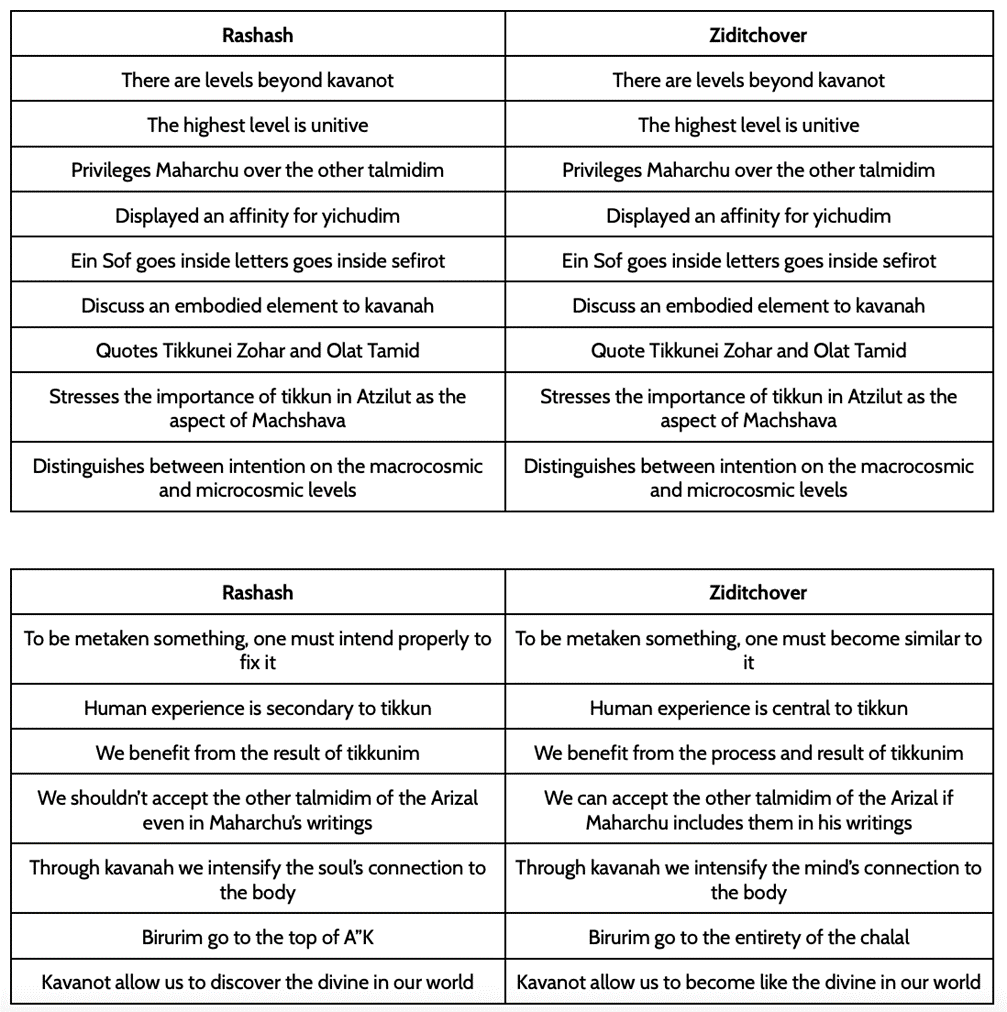


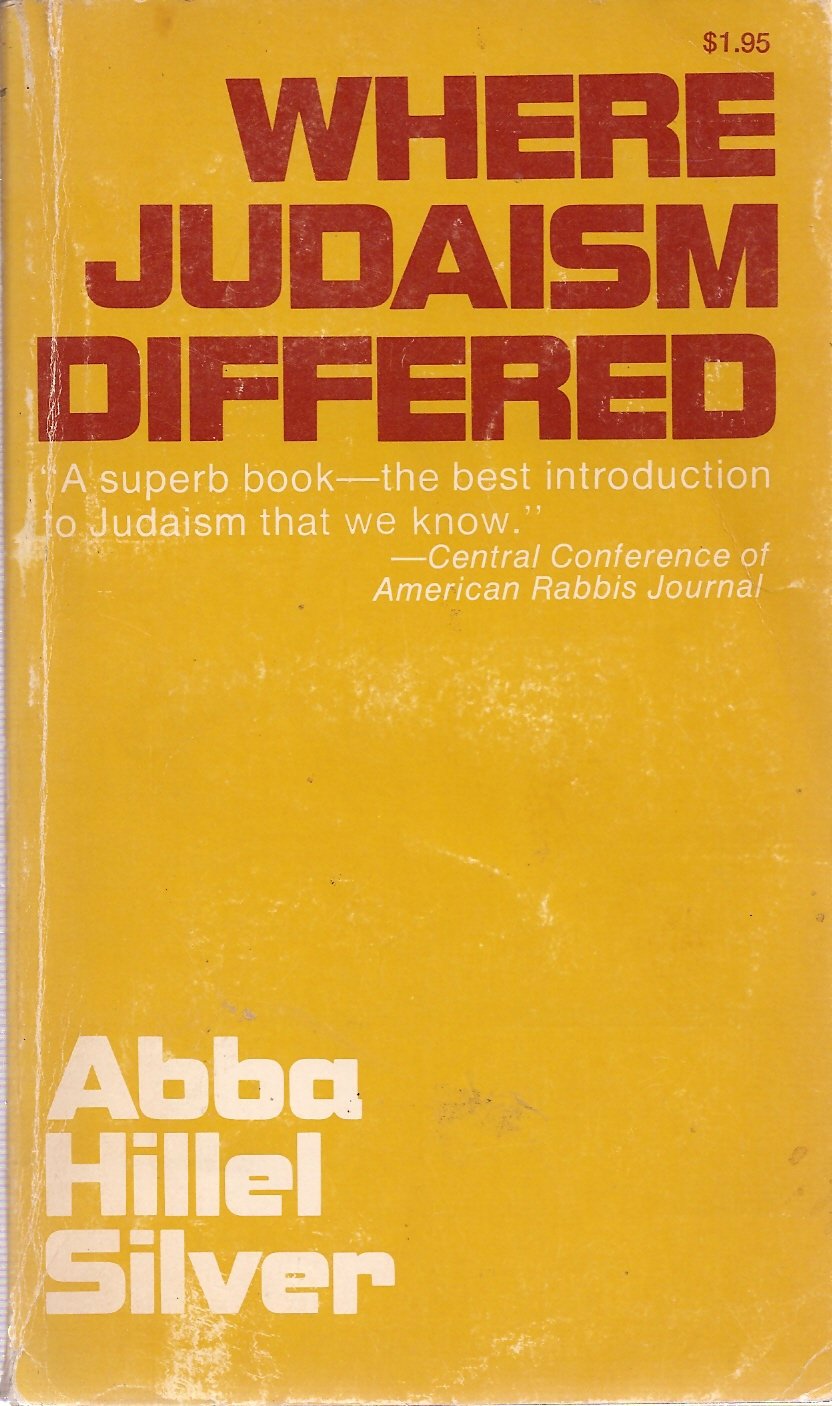


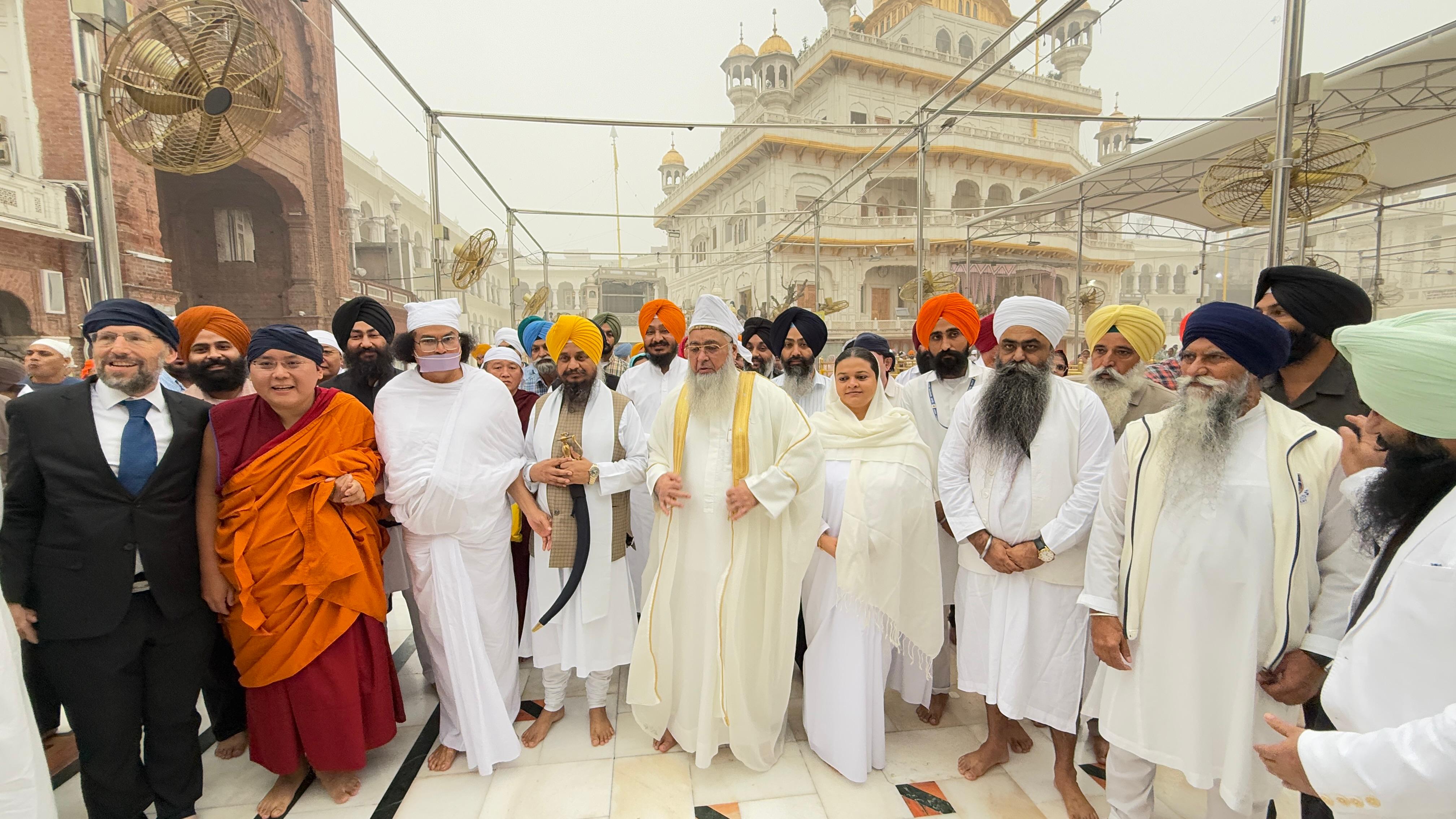


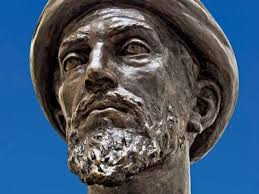


 The Book of Doctrines and Opinions: